
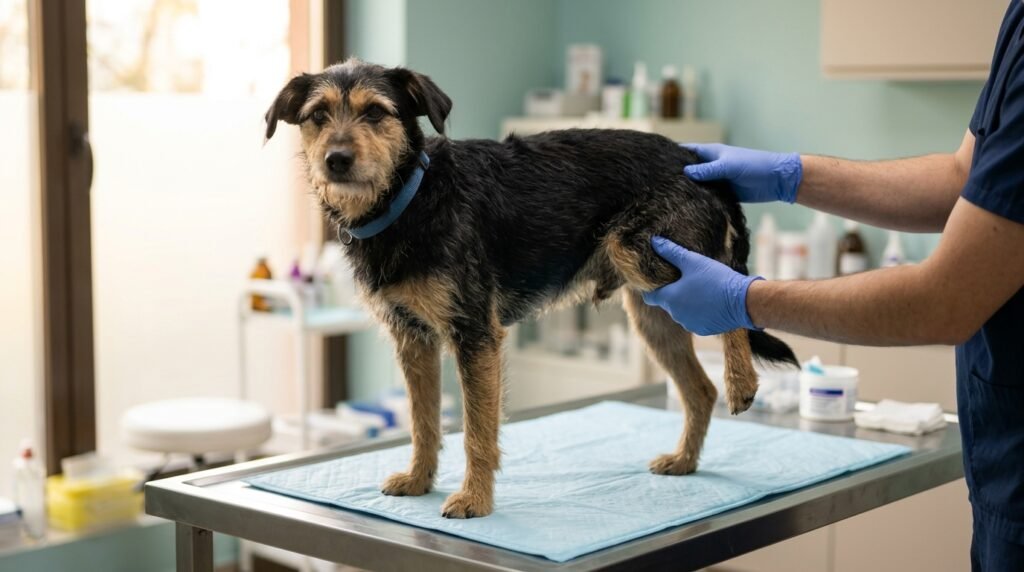

When a dog that was bounding around yesterday starts favouring a leg today, most owners do two things: check the paw, then search for a dog hospital near me. Both are reasonable first moves. Dog limping can come from something as small as a split nail or as serious as a torn knee ligament, and the hard part is telling the difference from your living room. This guide walks through how to spot which leg is sore, the most common causes by age and breed, the signs that mean you should come in right away, and what actually happens during a lameness exam at South Etobicoke Animal Hospital on The Queensway.
Why Dogs Limp, and Why They Hide It
A limp is not a disease. It is your dog’s way of taking weight off something that hurts, feels unstable, or is not getting the right nerve signals. Dogs mask discomfort well, and many only show the limp after they cool down or first thing in the morning. Note when it started, whether it came on suddenly or gradually, and whether it is worse after rest or exercise. Your vet will ask all three.
How to Tell Which Leg Is Sore
Have someone walk your dog on a leash in a straight line, away from you and back. Film it on your phone. A 20-second video is often the most useful thing you can bring to the exam.
Dog Limping on a Front Leg
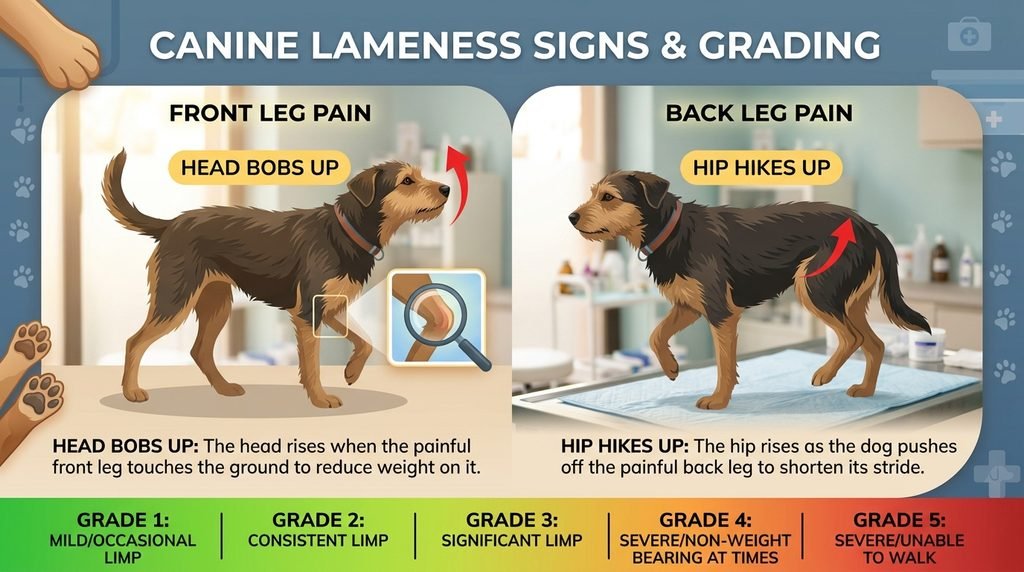
Watch the head. When the sore front leg lands, the head lifts to take weight off it. When the good leg lands, the head drops. Dogs with front leg pain may also take shorter steps and shift weight toward the back end.
Dog Limping on a Back Leg
Dog limping on a back leg is harder to see because there is no head bob. Look at the hips instead. The hip on the sore side often rises as that foot lands. Other clues include a shortened stride, toe-touching, a “bunny hop” on stairs, and sitting with one hind leg kicked out to the side instead of tucked neatly under the body. That sloppy sit is a classic sign of knee trouble.
How Bad Is It? A Simple Lameness Scale
Many vets grade lameness on a five-point scale. Use this as a rough guide when describing what you see.
| Grade | What You See | What It Usually Means |
|---|---|---|
| 1 | Barely noticeable, comes and goes | Mild, monitor and book if it persists |
| 2 | Visible at a walk, still uses the leg well | Book an exam within a few days |
| 3 | Obvious limp at a walk and trot | Book within a day or two |
| 4 | Toe-touching, holds leg up at times | Same-day exam |
| 5 | Will not put the leg down at all | Urgent, come in now |
Common Causes of Dog Limping
Age, breed, body weight, and how the limp started narrow the list quickly. Here are the causes we see most often.
Paw and Nail Injuries
Start at the foot. Cut pads, torn nails, splinters, and grass awns wedged between the toes are common after time along the Lake Ontario shoreline or in long grass. In Etobicoke winters, road salt cracks and burns pads, and in summer hot asphalt can blister them. Constant licking or swelling between the toes suggests something is embedded or infected.
Sprains, Strains, and Soft-Tissue Injuries
A bad landing, a slip on hardwood, or a sharp turn at the dog park can stretch a muscle or ligament. These limps usually start suddenly after activity and improve with strict rest over a few days. If a “sprain” is not clearly better within 48 hours, it may not be a sprain.
Cruciate Ligament Disease
The cranial cruciate ligament stabilizes the knee and is the dog version of a human ACL. According to the American College of Veterinary Surgeons, rupture of this ligament is one of the most common reasons for hind limb lameness, and partial tears almost always progress to full tears over time. In dogs it is usually a slow, degenerative problem linked to weight, genetics, and body shape rather than a single injury. Labs, Rottweilers, and Newfoundlands are prone to it. Watch for a sudden hind leg limp after play, toe-touching, and the kicked-out sit.
Kneecap Problems (Patellar Luxation)
Small breeds such as Pomeranians, Yorkies, and Chihuahuas often have kneecaps that slip out of place. The typical sign is a skip: the dog hops on three legs for a few strides, then carries on normally. Frequent or painful luxations need an assessment.
Hip and Elbow Dysplasia
In these developmental conditions the joint does not form correctly. Elbow dysplasia often shows up as front leg lameness in young large breeds, while hip dysplasia causes a swaying gait and stiffness after rest. Both lead to arthritis if unmanaged.
Arthritis in Adult and Senior Dogs
Osteoarthritis is the most common joint disease in dogs. A large VetCompass study of more than 455,000 dogs found that dogs over 12 were 54 times more likely to be diagnosed than dogs under three, and dogs above average weight for their breed were about 2.3 times more likely to be diagnosed. North American estimates cited in that Scientific Reports study range from 20% of dogs older than one year to 80% of dogs older than eight. A 2024 study in the same journal even found X-ray signs of arthritis in close to 40% of dogs aged eight months to four years. Arthritic limps are usually worse after naps and in cold, damp weather.
Growing Pains in Puppies (Panosteitis)
Young large-breed dogs, especially German Shepherds, can develop inflammation in the long bones that causes a limp that shifts from leg to leg. It is self-limiting but painful, and it needs to be told apart from dysplasia and injury with an exam and X-rays.
Tick-Borne Disease and Infection
A limp that moves between legs, paired with fever, low energy, or poor appetite, can point to Lyme disease. Researchers at the Ontario Veterinary College have noted that blacklegged tick populations are now established in parts of Ontario, and their survey of Canadian veterinarians lists shifting limb lameness, fever, and reduced appetite as common signs in dogs. Joint infections and bite wounds that abscess can also cause a sudden, hot, swollen limp.
Fractures, Bone Tumours, and Nerve Problems
Fractures and dislocations usually follow a fall, a car accident, or rough play. In large breeds past middle age, a persistent limp with firm swelling near a joint needs prompt X-rays to rule out bone cancer. Spinal and nerve problems can also mimic a limp, with scuffed nails, knuckling, or wobbliness.
| Cause | Typical Dog | Limp Pattern | How Soon to Be Seen |
|---|---|---|---|
| Paw or nail injury | Any age, active dogs | Sudden, licks paw | Same day if bleeding or swollen |
| Sprain or strain | Active adults | Sudden, after exercise | If not better in 48 hours |
| Cruciate disease | Medium to large, often overweight | Sudden or gradual hind leg limp | Within a day or two |
| Patellar luxation | Small breeds | Skipping, hops then normal | Book an exam |
| Hip or elbow dysplasia | Young large breeds | Gradual, stiff after rest | Book an exam |
| Arthritis | Middle-aged and seniors | Gradual, worse in the morning | Book an exam |
| Panosteitis | Large-breed puppies | Shifts between legs | Book an exam |
| Lyme or infection | Dogs with tick exposure | Shifting, with fever or lethargy | Within 24 hours |
| Fracture or dislocation | Any, after trauma | Non-weight-bearing | Immediately |
When to Worry: Emergency vs Same-Week vs Watch at Home
Come In Now
- Your dog will not put any weight on the leg
- The leg looks bent, dangling, or out of place
- There is a deep wound, heavy bleeding, or visible bone
- The limp followed a fall, a car accident, or a dog fight
- Your dog is crying out, panting heavily, or cannot get comfortable
- Weakness or dragging in both back legs, or sudden wobbliness
For any of these, come in right away. If you are looking for an urgent care vet near me, our hospital sees urgent cases without an appointment, and a quick call on the way helps the team prepare. Our earlier guide on emergency vet Etobicoke warning signs covers other red flags worth knowing.
Book Within a Day or Two
- The limp has lasted more than 24 to 48 hours
- Your dog is toe-touching or the limp is getting worse
- There is swelling, heat, or pain when you touch a joint
- The limp keeps coming back after exercise
- The limp shifts between legs, or comes with fever or poor appetite
Monitor at Home for 24 to 48 Hours
A mild limp that started after hard play, where your dog still bears weight, eats normally, and seems otherwise bright, can often be watched with strict rest. If it is not clearly better in two days, book an exam. If you are unsure which category your dog falls into, a telemedicine veterinary care consult can help you decide whether an in-person visit is needed today.
What to Do at Home Before Your Appointment
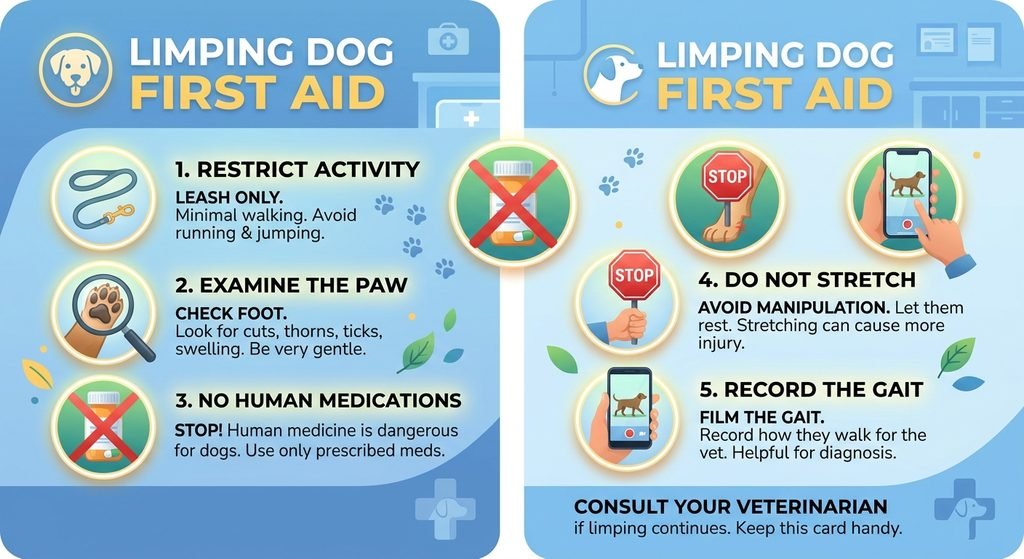
- Restrict activity. Leash-only bathroom breaks, no stairs, no jumping, no fetch.
- Check the paw. Look between the toes and at each nail in good light.
- Skip human pain medication. Ibuprofen and acetaminophen can damage a dog’s stomach, kidneys, or liver, and the Pet Poison Helpline handles thousands of these cases.
- Do not force the leg. Stretching a painful joint can worsen a partial injury.
- Take a video. Film the limp before you leave.
What Happens When You Bring a Limping Dog to the Vet
History and Gait Exam
We ask about timing, activity, weight changes, and tick exposure, then watch your dog walk and trot. Your video helps, because adrenaline makes many dogs walk perfectly in the exam room.
Orthopedic Exam
The vet works through each limb from toes to shoulder or hip, feeling for swelling, heat, muscle loss, and pain. They check joint range of motion and test knee stability for cruciate damage. Some dogs need light sedation so muscles relax enough for an accurate assessment.
X-Rays, Bloodwork, and Other Tests
Our in-house veterinary diagnostic imaging includes digital X-rays that show fractures, arthritis, dysplasia, and bone changes within seconds of capture. If infection, Lyme disease, or inflammatory joint disease is on the list, dog diagnostic tests such as bloodwork and tick-borne disease screening help confirm the cause. Some cases need a joint fluid sample or referral for CT or MRI.
Treatment Options
Depending on the cause, treatment may include strict rest, dog-safe anti-inflammatories, weight management, antibiotics for tick-borne disease, wound care or splinting, and surgery when the tissue cannot heal on its own.
Our team performs soft-tissue, wound repair, and trauma procedures on site with individualized anaesthesia and continuous monitoring. If you are looking for pet surgery near me because your dog needs a specialized orthopedic repair, such as cruciate stabilization, your vet will explain the options, which may include referral to a surgical specialist. For an idea of how canine surgery and recovery usually go, read our step-by-step guide.
Case Study: A Typical Hind Leg Lameness Workup
The following is a representative example of how a common case unfolds, not an individual patient’s record.
| Stage | What Happens |
|---|---|
| Presentation | A seven-year-old, slightly overweight Labrador mix starts toe-touching on the right hind leg after a game of fetch |
| Home step | Two days of rest; the limp improves, then returns after a short walk |
| Exam findings | Knee thickening, mild thigh muscle loss, and pain on knee flexion |
| Diagnostics | Sedated knee testing and X-rays point to cruciate disease with early arthritis |
| Plan | Pain control, rest, weight loss, and a talk about surgery versus conservative care |
| Takeaway | Recurring hind leg limps deserve an early exam, before more arthritis forms |
How to Lower Your Dog’s Risk of Leg Problems
- Keep your dog lean. Extra weight raises the risk of arthritis and cruciate disease.
- Build fitness gradually. Daily moderate exercise beats quiet weekdays and a long Saturday hike.
- Trim nails and add traction. Short nails and runner rugs on slippery floors protect toes and joints.
- Protect paws in winter. Rinse off road salt after walks.
- Stay on tick prevention. Ticks can be active on mild days in any season.
- Keep up with checkups. Annual exams catch joint changes early.
Limping Dog Care in South Etobicoke
If your dog is limping and you are unsure what to do next, we can help. We see dogs from South Etobicoke, Mimico, New Toronto, and Long Branch, with digital X-rays, an in-house lab, and surgical care under one roof. Call us at +1 (416) 201-9123, email petcare@southetobicokeanimalhospital.ca, or book a vet appointment online. You will find us at 741 The Queensway, Etobicoke, ON M8Z 1M8.
Frequently Asked Questions
-
Should I take my dog to the vet if it is limping but not crying?
Yes, if the limp lasts more than a day or two or keeps returning. Dogs hide pain well, so the absence of whining does not mean the problem is minor. Cruciate tears, arthritis, and early bone disease often cause quiet limps that slowly worsen. If you are searching for a vet near me because a limp has not settled after 48 hours of rest, it is worth booking an exam to find the cause before it progresses.
-
Why is my dog limping on a back leg but not in pain?
Many dogs with a back leg limp are sore but simply not showing it. A limp means your dog is protecting the leg for a reason. Common quiet causes include partial cruciate tears, a slipping kneecap, hip dysplasia, and early arthritis. Some neurological problems can also cause an odd gait without obvious pain. A hands-on orthopedic exam, and sometimes X-rays, are the only reliable way to tell these apart and decide on the right treatment.
-
Can a dog limp go away on its own?
Some can. A mild sprain or a small pad scrape often settles within a few days of strict rest. But many causes of dog limping, including cruciate disease, dysplasia, and arthritis, do not heal on their own and tend to worsen without treatment. A useful rule is to rest your dog for 24 to 48 hours. If the limp is not clearly improving, or it comes back after activity, book a visit at a dog vet near you.
-
Can I give my dog ibuprofen or Tylenol for a limp?
No. Human pain relievers such as ibuprofen, naproxen, and acetaminophen can cause serious stomach ulcers, kidney injury, or liver damage in dogs, even at doses that seem small. Dogs process these drugs very differently from people. Your veterinarian can prescribe an anti-inflammatory made for dogs and dosed to your dog’s weight. If your dog has already swallowed a human pain pill, call your vet or an emergency vet near me right away.
-
How do vets find out why a dog is limping?
Vets combine your history, a gait assessment, and a hands-on orthopedic exam that checks every joint, bone, and muscle in the affected leg. Based on those findings, they may recommend digital X-rays to look at bones and joints, bloodwork or tick-borne disease testing, or a joint fluid sample. Light sedation is sometimes needed for accurate knee testing. Bringing a short video of the limp at home makes the exam faster and more accurate.
-
When does a limping dog need surgery?
Surgery is usually considered when the problem is structural and will not heal with rest and medication alone. Examples include fractures, complete cruciate ligament tears in active or larger dogs, severe kneecap luxation, deep wounds, and some joint or bone tumours. Your vet will weigh your dog’s age, size, activity level, and overall health before recommending it. If you are comparing pet surgery near me options, ask how anaesthesia is monitored and what recovery support is included.
A limp is your dog’s way of asking for help, and the sooner you listen, the more options you will have.