


Most pets with intestinal worms or early heartworm look perfectly healthy, which is exactly why routine parasite testing for pets matters more than most owners realize. If you have been searching for a vet near me to handle your dog’s or cat’s annual screening, this guide explains which tests Ontario pets actually need, how often to do them, what the results mean, and how South Etobicoke Animal Hospital fits testing into everyday preventive care.
Why Parasite Testing Matters in Ontario
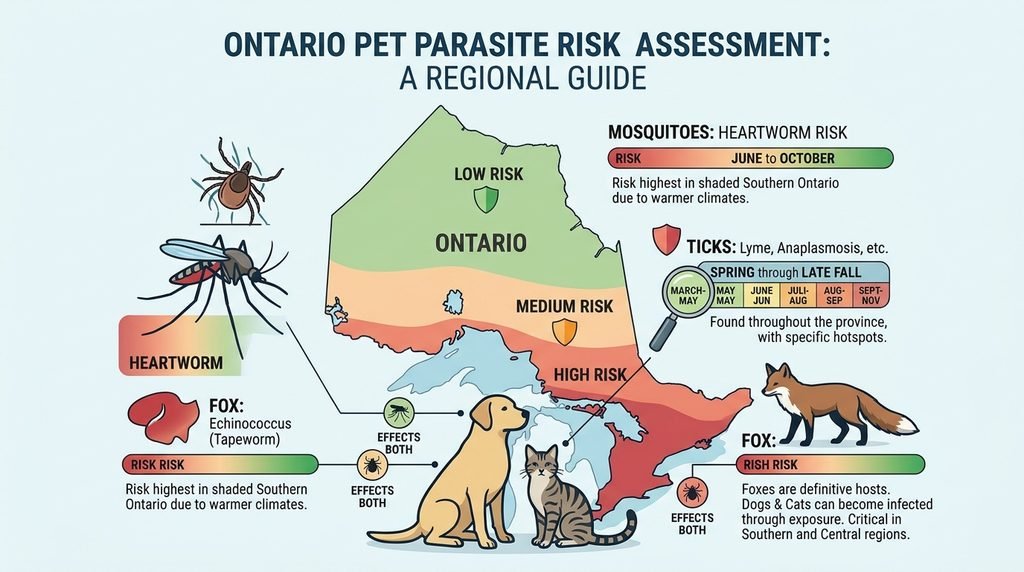
Ontario has a parasite profile that is different from much of Canada. Southern Ontario accounts for the large majority of Canadian heartworm cases, blacklegged ticks keep spreading into new areas, and a tapeworm that was unknown in the province before 2012 is now found in local wildlife. Our neighbourhood sits along the Lake Ontario shoreline, with parks, ravines, and trails where dogs can meet coyote and fox droppings, mosquitoes, and ticks within a single walk.
Testing does three jobs:
- Finds infections before they cause illness. Many parasites live quietly for months before weight loss, diarrhea, coughing, or anemia appear.
- Protects your family. Some pet parasites can infect people, especially young children who play in soil.
- Confirms prevention is working. Missed doses, spit-out tablets, and resistant parasites happen. A test tells you where you actually stand.
The Canadian Parasitology Expert Panel recommends that annual health exams include regular diagnostic monitoring for vector-borne and fecal parasites, and notes that fecal monitoring is still worthwhile even for pets already on a monthly preventive.
The Main Parasites Tests Look For
Intestinal Worms and Protozoa
Roundworms, hookworms, whipworms, and tapeworms are the classic intestinal worms. Giardia and coccidia are single-celled parasites that commonly cause diarrhea in puppies, kittens, and dogs that drink from puddles or ponds. Puppies very often pick up roundworms from their mother before or shortly after birth, so a “clean” breeder or shelter history does not rule them out.
Roundworms are the main public health concern. According to the CDC, toxocariasis spreads to people through contact with soil contaminated by infected dog or cat feces, and severe cases are more likely in young children. Regular testing and treatment of pets lowers the number of eggs left in yards, parks, and sandboxes.
Heartworm
Heartworm is spread by mosquitoes and lives in the heart and lung blood vessels. Dogs are the main host, though cats can also be infected and often become more seriously ill. CPEP’s Ontario parasite data puts overall heartworm prevalence in Ontario dogs at roughly 0.5%, rising to 5% to 10% in some southern Ontario pockets among dogs not on a preventive. In southern Ontario, the transmission season conservatively runs from early June to mid-October.
Tick-Borne Diseases
Blacklegged ticks can carry Lyme disease and anaplasmosis. Many exposed dogs never show signs, but some develop fever, lethargy, and joint pain. A combined blood test can screen for heartworm and several tick-borne infections from the same small sample, which is useful for dogs that hike, cottage, or travel. For more on timing, our guide to tick season Ontario explains when ticks are most active and how prevention fits around it.
Echinococcus Multilocularis
This small tapeworm deserves its own mention. Researchers at the Ontario Veterinary College found it in 23% of 460 wild coyotes and foxes sampled across southern Ontario, with infection concentrated in the western-central part of the province, as summarized on the Worms & Germs Blog. Dogs that eat rodents or wildlife droppings are at highest risk. Its eggs look identical to common tapeworm eggs under the microscope, so your vet may recommend targeted deworming for high-risk dogs instead of relying on a routine fecal result alone.
Types of Parasite Tests: A Comparison
| Test | Sample | What It Detects | Best Used For |
|---|---|---|---|
| Fecal flotation | Fresh stool | Worm eggs and some protozoa | Routine annual screening |
| Fecal antigen test | Fresh stool | Proteins from adult worms or Giardia | Catching infections before eggs appear |
| Fecal PCR panel | Fresh stool | Parasite DNA | Ongoing diarrhea or unclear results |
| Heartworm antigen test | Small blood sample | Adult female heartworms | Annual spring testing in dogs |
| Combined vector-borne test | Small blood sample | Heartworm plus tick-borne infections | Dogs with tick or travel exposure |
| Skin scraping or flea comb | Skin, coat | Mites, fleas, flea dirt | Itchy skin, hair loss, scratching |
Fecal flotation is the workhorse, but it has limits. Some parasites shed eggs only intermittently, and very young infections may not be producing eggs yet. That is why a single negative result in a pet with ongoing symptoms is often followed by a repeat sample or a more sensitive test.
How Parasite Testing Works at Our Hospital
Fecal screening at our hospital is done in our in-house lab, so most routine results are ready within minutes of the sample being processed. When a pet needs a broader parasite DNA panel or a specialized infectious disease test, we send samples out for veterinary laboratory testing through our reference lab partners.
How to Collect a Good Stool Sample
- Collect stool from the most recent bowel movement, ideally within 12 hours of your visit.
- A portion about the size of a grape or a sugar cube is enough.
- Use a clean, sealed container or a zip bag. Keep it cool, but do not freeze it.
- For cats, scoop from the top of fresh litter and avoid clumps heavy with litter.
- If your pet has diarrhea, bring what you can and tell us how long it has been going on.
Heartworm and Blood-Based Tests
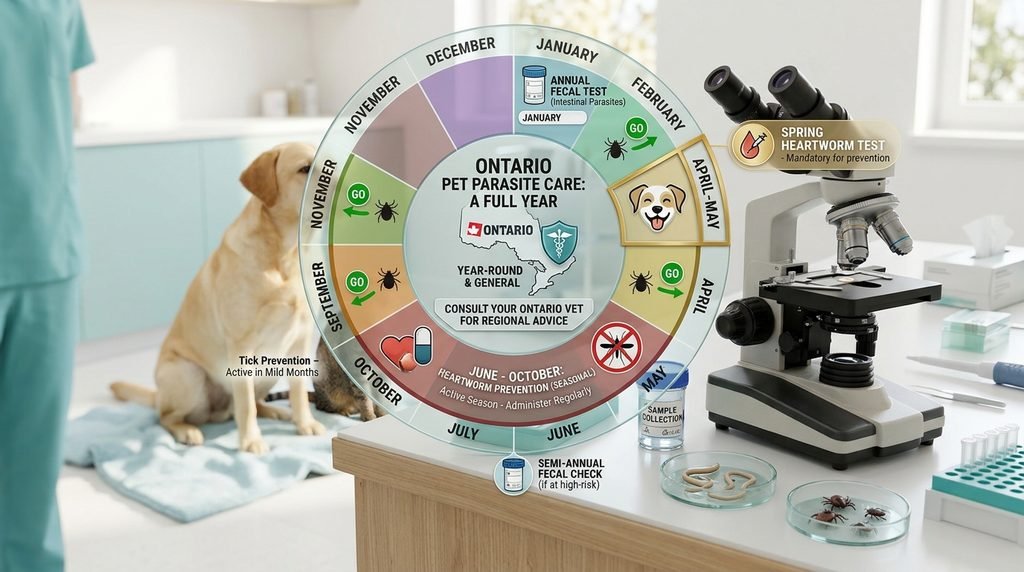
Blood tests need only a few drops drawn from a leg vein. For dogs in southern Ontario, testing in spring makes the most sense, because heartworm takes several months to mature to a stage that tests can detect. Since CPEP data show that 85% to 90% of dogs diagnosed with heartworm in Canada were not on prevention the year before, testing and preventive medication work best as a pair.
How Often Should Pets Be Tested?
Testing frequency depends on age and lifestyle. The schedule below reflects current Canadian expert guidance, and your veterinarian will adjust it for your pet.
| Pet Profile | Fecal Testing | Heartworm Testing |
|---|---|---|
| Puppies and kittens | At least twice in the first year | Discussed at the first puppy visits |
| Indoor-only adult cats | At least once a year | Based on risk |
| Adult dogs, low risk | One to two times a year | Every spring |
| High-risk pets (raw diets, hunting, dog parks, daycare, contact with wildlife or young children) | Three to four times a year | Every spring |
| Newly adopted or imported pets | At the first visit, then as advised | At the first visit, if over seven months old |
New puppies and kittens get their first fecal checks as part of our puppy wellness exam visits, where we also set up a deworming plan that matches their age.
What Your Pet’s Results Mean
A Negative Result
A negative test means no evidence of parasites was found in that sample. It is good news, but not a lifetime guarantee. Reinfection is common, especially for dogs that sniff and graze outdoors, which is why testing is repeated on a schedule.
A Positive Result
Most intestinal parasites are treated with a short course of oral medication, followed by a recheck test to confirm it worked. Giardia may also need a bath at the end of treatment and careful clean-up of the yard and bedding to stop reinfection. A positive heartworm test leads to confirmatory testing, chest imaging, and a staged treatment plan.
Protecting Your Household After a Positive Result
- Pick up stool from your yard daily.
- Wash hands after handling your pet, litter, or poop bags.
- Wash bedding and toys in hot water.
- Keep children from playing in soil where pets toilet.
- Test other pets in the home if your vet recommends it.
Case Study: A Routine Screen That Caught Something Early
The following is a representative example of a common scenario, not an individual patient’s record.
| Stage | What Happens |
|---|---|
| Background | A 10-week-old puppy from a reputable breeder, dewormed once, eating well and playful |
| Visit | First wellness visit, with a fresh stool sample brought from home |
| Finding | In-house fecal flotation shows roundworm eggs despite the earlier dose |
| Plan | Age-appropriate dewormer repeated on schedule, hygiene advice for a home with a toddler |
| Follow-up | Recheck fecal test after treatment comes back negative |
| Takeaway | A healthy-looking pet with a clean history can still carry worms, and testing is the only way to know |
How Testing Fits Into Preventive Care
Parasite testing works best as one part of a bigger plan. Good pet preventive care combines a nose-to-tail exam, vaccines matched to lifestyle, dental checks, weight monitoring, and parasite prevention chosen from actual test results rather than guesswork. Bloodwork, urinalysis, and fecal screening often happen during the same visit, which saves a second trip. If you want to see how screening fits with other routine diagnostics, our article on veterinary lab tests breaks down what each common test checks.
Owners comparing clinics for preventive vet care Etobicoke options often ask what makes a practical plan. In our experience, the answer is simple: a schedule you can actually keep, test results you understand, and prevention that matches how your pet lives.
Parasite Testing at South Etobicoke Animal Hospital
We provide in-house fecal screening, annual heartworm testing, and individualized prevention plans for dogs and cats across South Etobicoke, Mimico, New Toronto, and Long Branch. New clients can start at our new patient centre. To arrange a parasite screen, call +1 (416) 201-9123, email petcare@southetobicokeanimalhospital.ca, or visit us at 741 The Queensway, Etobicoke, ON M8Z 1M8.
Frequently Asked Questions
-
How often should my dog have a fecal test in Ontario?
Most adult dogs in Ontario should have at least one fecal test a year, and twice a year is reasonable for dogs that visit parks, daycare, or trails. Dogs at higher risk, such as those on raw diets, hunting dogs, or dogs living with young children, may need testing three to four times a year. If you are looking for a vet near me for routine fecal screening, ask for a schedule based on your dog’s lifestyle.
-
Do indoor cats really need parasite testing?
Yes. Indoor cats can still pick up parasites from potting soil, insects, other pets, or eggs carried in on shoes. Kittens often arrive already carrying roundworms passed on by their mother. An annual fecal test is a simple, low-stress way to catch infections early. Your veterinarian may also discuss heartworm risk if your cat spends time on a balcony or screened porch where mosquitoes can reach them during summer.
-
Is my pet’s parasite test accurate if it comes back negative?
A negative result is reliable for that sample, but no single test catches everything. Some parasites shed eggs only on certain days, and very early infections may not show up yet. That is why vets repeat tests on a schedule and sometimes request a second sample when a pet still has symptoms. Combining fecal flotation with antigen or PCR testing improves accuracy for pets with ongoing diarrhea or weight loss.
-
When is the best time for a heartworm test in Ontario?
Spring is ideal. Heartworm transmission in southern Ontario runs roughly from June to mid-October, and it takes months for an infection to become detectable. Testing in spring picks up infections from the previous season before you restart prevention. Dogs that travelled to the southern United States or were adopted from abroad may need testing at other times. Ask your veterinarian which timing suits your dog’s travel history.
-
Can I get worms from my dog or cat?
Some pet parasites can infect people. Roundworms and hookworms are the most common concerns, and children who play in contaminated soil face the highest risk. Giardia and some tapeworms can also spread between species. Good hygiene, daily yard clean-up, and regular parasite tests for your pets greatly reduce the chance of infection. If someone in your home has symptoms, speak with your family doctor.
-
Do I still need testing if my pet is on monthly prevention?
Yes. Monthly preventives are highly effective, but doses get missed, tablets get spat out, and not every product covers every parasite. Testing confirms that prevention is working and helps your vet choose the right product. Annual heartworm testing is also required before many preventives are prescribed in Canada. Regular checks are part of complete pet preventive care, not a replacement for it.
A five-minute sample today can save your pet, and your family, months of trouble later.