

At South Etobicoke Animal Hospital, our veterinary team sees pet emergencies every week. Some arrive just in time. Others arrive after hours of hesitation that made a treatable condition far more complicated. The difference almost always comes down to one thing: whether the owner recognized the warning signs early enough to act.
Pet emergencies rarely announce themselves with obvious drama. A dog who suddenly refuses to walk might be dealing with a spinal disc issue that will worsen by the hour. A cat hiding under the bed and skipping meals could be experiencing a urinary blockage that becomes fatal within 24 to 48 hours if left untreated. These situations do not wait for morning appointments or scheduled visits.
This guide breaks down the specific symptoms, timelines, and scenarios that should send you to an urgent care vet immediately, and the ones that can safely wait for a same-day or next-day appointment. Knowing the difference protects your pet and gives you the clarity to respond when panic sets in.
Breathing Emergencies: The Most Time-Sensitive Signs
Respiratory distress is the single most urgent reason to seek emergency veterinary care. When a pet cannot breathe properly, organ damage begins within minutes. The American Veterinary Medical Association (AVMA) classifies breathing emergencies among the top reasons pets are brought to emergency veterinary clinics across North America.
Watch for these patterns:
- Open-mouth breathing in cats. Healthy cats almost never breathe through their mouths. If your cat is panting, sitting with elbows out, or stretching their neck forward to pull air in, this is a genuine emergency. Causes range from heart failure to fluid accumulation in the chest cavity.
- Labored breathing with visible rib movement. If you can see your dog’s ribs expanding dramatically with each breath, or if the abdomen is pumping to help push air in and out, the respiratory system is under severe strain.
- Choking or gagging without producing anything. A dog that repeatedly retches without bringing anything up may have a foreign object lodged in the airway or esophagus, or could be experiencing gastric dilatation-volvulus (GDV), commonly known as bloat.
- Blue or grey gums. This indicates cyanosis, meaning the blood is not carrying adequate oxygen. Check your pet’s gum color regularly when they are healthy so you have a baseline for comparison.
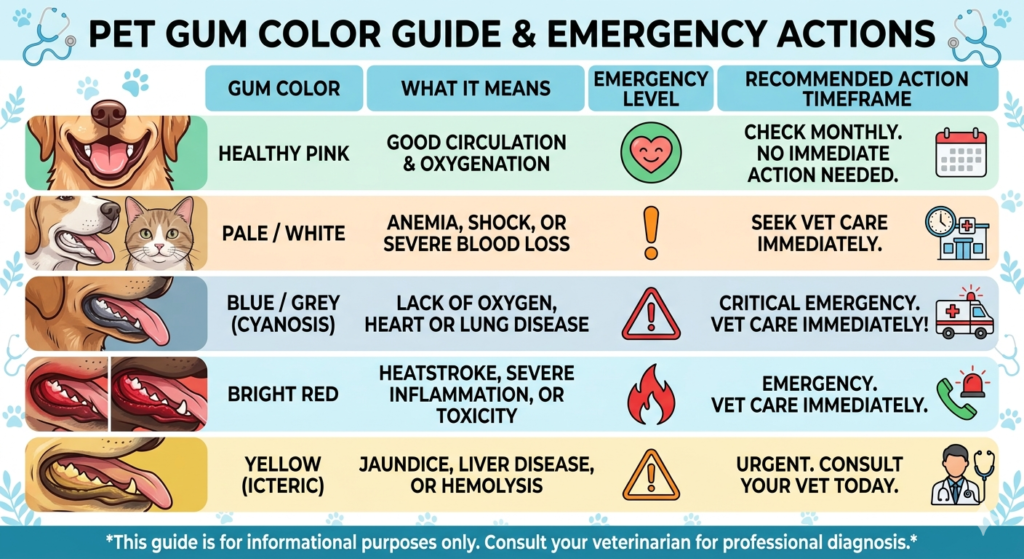

Any breathing abnormality that lasts more than two to three minutes warrants an immediate trip to the nearest emergency vet in Etobicoke. Do not wait to see if it resolves on its own.
Toxin Ingestion: What Gets Eaten Matters Less Than How Fast You Act
The ASPCA Animal Poison Control Center handles over 400,000 cases of pet poisoning annually across North America, and the organization consistently reports that household items are the most common culprits. Chocolate, xylitol (a sugar substitute found in gum, peanut butter, and baked goods), grapes, raisins, certain houseplants, and human medications top the list year after year.
Here is what most pet owners get wrong about poisoning: they wait for symptoms before seeking help. By the time a dog shows clinical signs of xylitol toxicity, for example, the liver may already be sustaining damage. The treatment window for decontamination, which often involves induced vomiting and activated charcoal, narrows rapidly once absorption begins.
If your pet ingests any known or suspected toxin:
- Note the substance, approximate quantity, and time of ingestion
- Do not induce vomiting at home unless explicitly instructed by a veterinarian
- Call your veterinarian or an emergency vet clinic immediately
- Bring the packaging or a photo of the substance with you
Quick access to in-house diagnostics allows the veterinary team to run blood panels on-site and assess organ function within minutes, which is critical for guiding treatment decisions in poisoning cases.
Traumatic Injuries: When the Damage Goes Deeper Than It Looks
A pet hit by a car, attacked by another animal, or involved in a fall from a balcony or window needs emergency veterinary evaluation even if they appear to walk away from the incident. Internal bleeding, organ contusion, and pneumothorax (collapsed lung) are common consequences of blunt force trauma, and none of these conditions are visible from the outside.
According to research published in the Journal of Veterinary Emergency and Critical Care, up to 30% of dogs struck by vehicles who initially appear stable develop life-threatening complications within the first 12 hours. Internal hemorrhage can progress silently. A pet may seem fine for several hours before collapsing suddenly as blood pressure drops below a critical threshold.
Trauma scenarios that always require emergency veterinary assessment:
- Hit by a vehicle, regardless of speed or apparent injury
- Fall from any height greater than two body lengths
- Animal bite wounds, especially puncture wounds that may appear small but track deep into muscle or body cavities
- Any incident involving visible bone exposure, joint abnormality, or inability to bear weight
Emergency imaging through pet ultrasound and digital X-rays provides the veterinary team with a rapid internal picture. Fractures, fluid accumulation, and organ displacement can be identified within minutes, allowing the team to move directly into stabilization or veterinary surgical procedures if needed.
Gastrointestinal Emergencies: Beyond a Simple Upset Stomach
Vomiting and diarrhea are common in pets and do not always signal an emergency. A single episode of vomiting in an otherwise bright, active pet is usually not cause for an after-hours visit. But there are specific patterns that change the equation dramatically.
When Vomiting Becomes an Emergency
- Vomiting repeatedly every 30 to 60 minutes without improvement
- Nonproductive retching, especially in large, deep-chested breeds (Great Danes, German Shepherds, Standard Poodles). This is the hallmark sign of GDV/bloat, one of the most rapidly fatal conditions in veterinary medicine
- Vomit containing blood, which may appear bright red or look like dark coffee grounds
- Vomiting combined with a painful, distended abdomen
- Vomiting after known ingestion of a foreign object (socks, toys, bones, string)
When Diarrhea Becomes an Emergency
- Profuse bloody diarrhea, particularly in puppies who may not be fully vaccinated
- Diarrhea combined with lethargy, refusal to eat, and pale gums
- Diarrhea lasting more than 24 hours in a puppy or senior pet
Hemorrhagic gastroenteritis (HGE) can cause rapid dehydration and shock in dogs. A large-breed dog with severe HGE can lose enough fluid volume in six to eight hours to become hemodynamically unstable. Puppies and senior pets decompensate even faster.
The “Quiet Emergency”: Subtle Signs That Are Easy to Miss
Not every emergency involves dramatic symptoms. Some of the most dangerous conditions in veterinary medicine present with signs that pet owners often dismiss as “just not feeling well.”
Urinary blockage in male cats. A male cat straining in the litter box, crying while attempting to urinate, or licking his genital area obsessively may have a urethral obstruction. This condition causes toxins to build up in the bloodstream and can lead to fatal cardiac arrhythmia within 24 to 48 hours. The Ontario Veterinary Medical Association identifies urinary obstruction as one of the most commonly delayed feline emergencies, because owners initially mistake straining for constipation.
Sudden hind-limb paralysis in cats. A cat that suddenly drags its back legs, cries in distress, and has cold rear paws may be experiencing a saddle thrombus, a blood clot that blocks circulation to the hind legs. This is directly linked to underlying heart disease and requires immediate intervention.
Collapse or sudden weakness. A pet that collapses, even briefly, and then appears to recover should be evaluated urgently. Causes include internal bleeding, cardiac arrhythmia, hypoglycemia, and Addisonian crisis, all of which can recur without warning.
Seizures lasting more than three minutes. A single brief seizure (under two minutes) in a pet with no seizure history is concerning but may not require a midnight emergency visit if the pet recovers normally. A seizure lasting more than three minutes, or cluster seizures occurring back to back, constitutes status epilepticus and requires immediate emergency veterinary care. The Merck Veterinary Manual classifies prolonged seizure activity as a neurological emergency with significant risk of permanent brain damage if untreated.
Emergency vs. Urgent vs. Can Wait: A Comparison Guide
Understanding the difference between a true emergency, an urgent concern, and something that can wait for regular clinic hours helps you make the right call under pressure.
| Situation | Category | Recommended Action |
|---|---|---|
| Difficulty breathing, blue gums | Emergency | Go to an emergency vet immediately |
| Toxin ingestion (chocolate, xylitol, medications) | Emergency | Call vet, then go immediately |
| Hit by car or major trauma | Emergency | Go immediately, even if pet seems okay |
| Nonproductive retching in large-breed dog | Emergency | Go immediately; suspect GDV/bloat |
| Male cat straining to urinate | Emergency | Go within 1-2 hours maximum |
| Seizure lasting 3+ minutes | Emergency | Go immediately |
| Persistent vomiting (6+ episodes in a day) | Urgent | Same-day vet visit |
| Limping but still bearing some weight | Urgent | Same-day or next-day appointment |
| Eye injury, squinting, or swelling | Urgent | Same-day vet visit |
| Single vomiting episode, pet otherwise normal | Can Wait | Monitor; schedule if it recurs |
| Mild diarrhea, eating and drinking normally | Can Wait | Monitor 24 hours; schedule if it persists |
| Small superficial cut, not actively bleeding | Can Wait | Clean and monitor; schedule if swelling develops |
A Case That Almost Waited Too Long
A five-year-old Beagle named Cooper arrived at our clinic on a Saturday evening. His owner had noticed him acting sluggish since the afternoon and had found an empty wrapper from a box of sugar-free gum on the kitchen floor. She was not sure how many pieces Cooper had eaten or exactly when it happened, but she estimated it had been at least three hours.
Cooper’s initial physical examination appeared relatively normal. He was walking, responsive, and his gums were pink. But the veterinary lab tests told a different story. His blood glucose had already dropped below 40 mg/dL, dangerously low, and early changes in his liver values suggested the xylitol was beginning to cause hepatic injury.
The team started IV dextrose supplementation and liver-protective therapy immediately. Over the next 48 hours, Cooper’s liver values peaked before slowly beginning to normalize. He went home four days later with a full recovery.
His owner later told us she had almost decided to “wait and see” overnight. Three more hours without treatment, and the outcome could have been very different. Xylitol poisoning is one of those emergencies where timing determines everything, and the research from the Cornell University College of Veterinary Medicine confirms that early intervention within the first few hours of ingestion significantly improves survival rates in canine xylitol toxicosis.
How to Prepare for a Pet Emergency Before One Happens
The worst time to figure out your emergency plan is during the emergency itself. A few minutes of preparation now can save critical time later.
- Program your veterinarian’s number into your phone. South Etobicoke Animal Hospital can be reached at +1 (416) 201-9123. Save it where you can find it under stress.
- Know your route. If you live in the Etobicoke, Mimico, Long Branch, or New Toronto area, familiarize yourself with the fastest route to 741 The Queensway before an emergency happens. Navigating unfamiliar roads in a panic with a distressed pet in the car is avoidable with a few minutes of planning.
- Assemble a basic pet first-aid kit. Include gauze, self-adhesive bandage wrap, a digital thermometer, saline solution for wound flushing, and a muzzle (injured pets may bite out of pain, regardless of temperament).
- Keep a pet medical summary handy. A single sheet listing your pet’s breed, weight, medications, allergies, and vaccine status speeds up intake at any emergency vet near me and reduces delays in treatment.
- Maintain your pet’s preventive care schedule. Many emergencies are preventable. A pet wellness exam catches developing heart conditions, dental infections, and organ changes long before they become crisis situations.
What to Expect When You Arrive at an Emergency Vet
Walking into a veterinary clinic during an emergency is stressful, and knowing the process beforehand reduces anxiety for both you and your pet.
When you arrive, a technician will perform a rapid triage assessment. Pets are seen based on medical urgency, not arrival order. A dog in respiratory distress will be taken back immediately, while a pet with a non-life-threatening laceration may wait. This system ensures that the most critical patients receive intervention first.
Expect the team to ask about the timeline of symptoms, any substances your pet may have accessed, and your pet’s medical history. Diagnostic workup typically begins with blood panels, imaging, or both, depending on the presenting signs. Clinics equipped with on-site laboratory and imaging equipment, such as digital X-ray and ultrasound, can move from assessment to diagnosis within minutes rather than hours, and this speed is often the determining factor in emergency outcomes.
If the situation requires common veterinary surgeries such as foreign body removal, GDV correction, or wound repair, the team will explain the procedure, risks, and expected recovery timeline before proceeding.
When It Cannot Wait Until Morning
Pet owners sometimes try to calculate whether an emergency is “bad enough” to justify the trip. If you are asking yourself whether your pet needs emergency care, that question itself is usually the answer. The risk of arriving at the clinic and discovering nothing is seriously wrong is far lower than the risk of staying home while a treatable condition becomes irreversible.
Every emergency that receives early intervention has a better prognosis, shorter recovery, and lower overall treatment complexity than the same emergency addressed hours or days later. That pattern holds across virtually every category of veterinary emergency, from toxin ingestion to traumatic injury to metabolic crisis.
If your pet is showing any of the warning signs described in this guide, do not wait. Call +1 (416) 201-9123 or head directly to 741 The Queensway, Etobicoke, ON M8Z 1M8. Our team is here to help when every minute matters.
Frequently Asked Questions
-
What qualifies as a pet emergency versus a condition that can wait?
A true pet emergency involves any symptom that threatens your animal’s life or could cause permanent damage if treatment is delayed even a few hours. Difficulty breathing, uncontrolled bleeding, toxin ingestion, seizures lasting beyond three minutes, inability to urinate, collapse, and major trauma all fall into this category. Conditions like mild limping, a single episode of vomiting in an otherwise normal pet, or minor skin irritation can usually wait for a scheduled appointment during regular clinic hours.
-
How do I know if my cat has a urinary blockage?
Male cats with urinary blockages typically strain repeatedly in the litter box without producing urine, vocalize or cry during attempts, lick their genital area excessively, and become increasingly lethargic. Some owners initially mistake these signs for constipation, but the distinction matters enormously. A blocked cat can develop life-threatening electrolyte imbalances and cardiac complications within 24 to 48 hours. If your male cat is straining without producing urine, treat it as an emergency and contact a veterinarian immediately.
-
Can I give my pet any medication at home before heading to the emergency vet?
Never administer human medications to your pet without explicit veterinary guidance. Common over-the-counter drugs like acetaminophen (Tylenol) are highly toxic to cats and can cause fatal liver and red blood cell damage. Ibuprofen and aspirin carry serious risks for both dogs and cats, including gastrointestinal ulceration and kidney failure. If your pet is in pain or distress, the safest course is always to seek professional veterinary care rather than attempting home treatment with human products.
-
Does South Etobicoke Animal Hospital handle pet emergencies during evenings and weekends?
Yes. South Etobicoke Animal Hospital operates extended evening and weekend hours specifically to accommodate urgent and emergency cases. The clinic is equipped with on-site laboratory testing, digital X-ray, ultrasound, and a surgical suite for cases requiring immediate intervention. Calling ahead at +1 (416) 201-9123 allows the team to prepare for your pet’s arrival and begin mobilizing the appropriate resources before you walk through the door.
-
What should I bring when rushing my pet to an emergency vet near me?
Bring any packaging from substances your pet may have ingested, a list of current medications and known allergies, and your pet’s vaccination records if you have them accessible. A towel or blanket can help keep an injured pet calm and contained during transport. If your pet is bleeding, apply gentle pressure with a clean cloth during the drive. Avoid restraining your pet’s mouth tightly, as injured or distressed animals may have difficulty breathing, and restricted airways compound the emergency.
If your pet is showing any warning signs discussed in this guide, trust your instincts and act quickly. Early intervention saves lives, shortens recovery, and gives your pet the best possible outcome.