
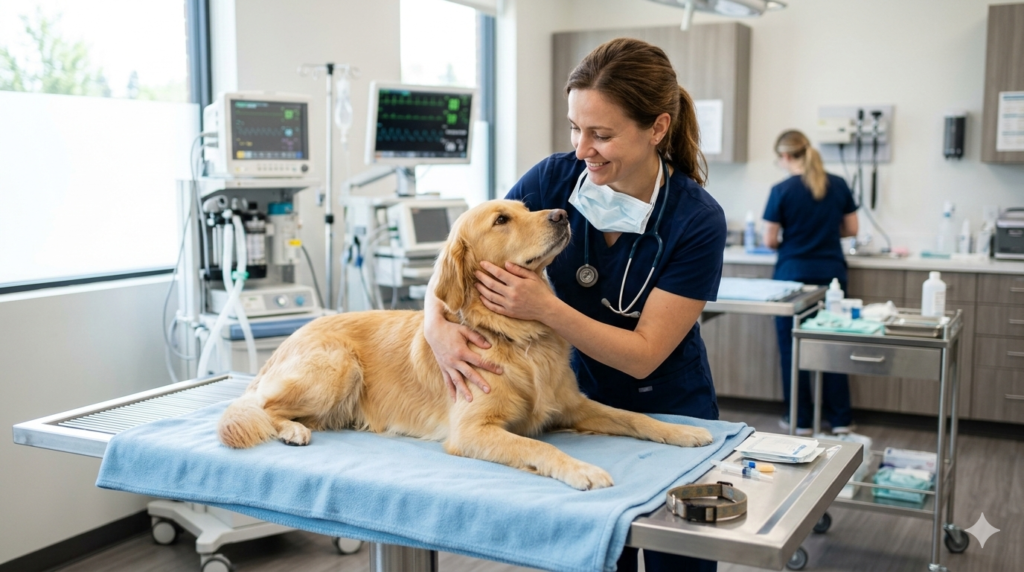

Nobody wants to hear the words “your pet needs surgery.” It is one of those moments that hits you right in the chest, no matter how prepared you think you are. But here is the thing most veterinarians wish more pet owners understood: the vast majority of animal surgical procedures performed on cats and dogs are routine, well-studied, and have excellent recovery outcomes. Many of them actually prevent bigger, costlier, and more painful problems down the road.
Whether your four-legged family member is a young puppy headed in for a spay, or a senior dog with a suspicious lump that needs investigating, understanding what to expect from veterinary surgeries for cats and dogs can take a lot of the fear out of the equation. And that is exactly what this guide is here to do.
At South Etobicoke Animal Hospital, located at 741 The Queensway in Etobicoke, our surgical team performs a wide range of veterinary surgical services every week. We have put this article together based on the real questions pet owners ask us, the surgeries we see most often, and the concerns families bring through our doors during evening and weekend appointments.
Why Pet Surgery Is More Common Than You Think
There is a widespread misconception that pet surgery is only necessary in extreme or emergency situations. The reality is quite different. Millions of cats and dogs undergo surgical procedures every single year across North America, and the overwhelming majority of those surgeries fall into a handful of well-established categories that veterinary teams perform with a high level of precision and confidence.
Routine procedures like spaying and neutering alone account for a significant percentage of all veterinary operations. Add in dental extractions, growth removals, and wound closures, and you begin to see how central surgery is to responsible pet ownership. The fact that these procedures have become so refined over decades of veterinary medicine is exactly what makes them safe and predictable.
What often separates a good outcome from a stressful experience is preparation. When owners know what a procedure involves, how to prepare their pet, and what recovery actually looks like, the whole process goes more smoothly for everyone involved, especially the animal.
Spay and Neuter Surgery: The Foundation of Preventive Surgical Care
Spay and neuter surgery remains the single most frequently performed surgical procedure in veterinary medicine, and for good reason. Beyond the obvious benefit of preventing unwanted litters, these operations carry meaningful long-term health advantages that many pet owners are not fully aware of.
For female cats and dogs, spaying (ovariohysterectomy) involves the removal of the ovaries and uterus. When performed before the first heat cycle, this procedure dramatically reduces the risk of mammary tumors later in life and eliminates the possibility of pyometra, a life-threatening uterine infection that is far more common than people realize. Pyometra alone sends thousands of pets to emergency vet hospitals across Canada every year, and it almost always requires emergency surgical intervention to resolve.
For males, neutering (castration) reduces territorial aggression, roaming behavior, and the incidence of testicular cancer and prostate problems. Male cats, in particular, benefit enormously. Unneutered toms are significantly more likely to engage in fights, spray urine indoors, and wander into traffic.
The procedure itself typically takes between 20 and 45 minutes depending on species, size, and individual anatomy. Pre-surgical bloodwork through our in-house diagnostics laboratory ensures that your pet is healthy enough for anesthesia before we proceed. Recovery usually involves 10 to 14 days of restricted activity, an Elizabethan collar, and one or two follow-up checks.
Our veterinary team at South Etobicoke Animal Hospital follows individualized anesthesia protocols for every patient, whether it is a two-kilogram kitten or a 40-kilogram Labrador. Each animal receives continuous vital sign monitoring from induction to full recovery.
Mass and Tumor Removal: When That Lump Needs Answers
Finding a lump on your pet is always unsettling. The good news is that not every mass is cancerous, and even when it is, early mass and tumor removal can make a significant difference in prognosis and quality of life.
Lumps and bumps fall into several broad categories. Lipomas, which are benign fatty deposits, are extremely common in middle-aged and older dogs. They are soft, moveable, and typically harmless, though they can occasionally grow large enough to interfere with movement. Sebaceous cysts, warts, and histiocytomas are other benign growths that show up frequently in clinical practice.
On the other hand, mast cell tumors, soft tissue sarcomas, and melanomas require prompt surgical attention. The standard approach is to perform a fine needle aspirate or biopsy first. At South Etobicoke Animal Hospital, we use our medical imaging services including digital radiographs and ultrasound to assess whether a mass has spread or if there are deeper concerns that need to be addressed before going into the operating room.
The surgery itself involves excising the mass with clean margins, which means the surgeon removes a buffer of healthy tissue around the growth to reduce the chance of regrowth. Samples are then sent to a reference laboratory for histopathological analysis, which tells us exactly what the mass is and whether additional treatment might be needed.
One scenario that we encounter regularly involves owners who noticed a small lump months earlier but assumed it was nothing. By the time they bring their pet in, the mass has tripled in size. Early investigation almost always leads to simpler surgery, shorter recovery, and better results. If you feel something new on your cat or dog, getting it checked sooner rather than later is always the right call.
Dental Surgery: More Than Just a Cleaning
Dental surgery in veterinary medicine goes far beyond the routine cleaning and polishing that most people picture when they hear about pet dental care. While prophylactic cleanings are an important part of pet dentistry, surgical intervention becomes necessary when there is advanced periodontal disease, fractured teeth, tooth root abscesses, or oral masses that need to be addressed under general anesthesia.
Periodontal disease affects an estimated 80 percent of dogs and 70 percent of cats over the age of three. That statistic is staggering, and yet dental problems remain one of the most under-diagnosed conditions in companion animals. The reason is simple: pets are remarkably good at hiding oral pain. A dog with a cracked molar or a cat with resorptive lesions will often continue eating, albeit more slowly or on one side of the mouth, and the owner has no idea anything is wrong until the condition has progressed significantly.
Our dental procedures begin with a comprehensive oral exam under anesthesia, followed by full-mouth digital dental radiographs. These images are essential because roughly 60 percent of tooth pathology exists below the gumline where it cannot be seen with the naked eye. Once we have a complete picture, we develop a treatment plan that may include scaling, polishing, extractions, or in some cases, oral mass removal.
Tooth extractions, while they sound alarming, are one of the most effective ways to eliminate chronic pain and infection. Cats and dogs adapt remarkably well to missing teeth. In fact, most owners report that their pet seems happier, more energetic, and more willing to eat after dental surgery. The relief from chronic pain alone can transform an animal’s behavior and quality of life.
Wound Repair and Trauma Surgery: When Accidents Happen
Wound repair and trauma surgery covers a broad range of situations, from bite wounds and lacerations to more complex cases involving internal injuries. These are the surgeries that often arrive without warning, which is why access to an emergency and urgent care veterinary team matters so much.
Cat bite abscesses are among the most common wound-related surgeries in feline patients. Outdoor cats and those who live in multi-cat households are especially prone to bite wounds that seal over on the surface but develop painful infections underneath. These abscesses require surgical lancing, flushing, and sometimes the placement of a drain to ensure proper healing.
Dog-on-dog bite injuries represent another frequent surgical case. Even a seemingly small puncture wound can cause significant tissue damage beneath the skin, because canine teeth create a crushing and tearing force that extends well beyond the visible entry point. Thorough surgical exploration, debridement of dead tissue, and layered closure are often necessary to promote clean healing and prevent secondary infection.
Hit-by-car injuries, falls from balconies, and encounters with wildlife round out the more serious end of trauma surgery. These cases may involve internal bleeding, organ damage, or fractures that require stabilization. Our team uses digital radiographs and ultrasound imaging to assess the full extent of internal injuries before developing a surgical plan.
South Etobicoke Animal Hospital operates with extended evening and weekend hours specifically because emergencies do not follow a schedule. Our team is equipped for emergency surgical intervention during all operating hours, which means faster stabilization and treatment when time is a critical factor.
Orthopedic Evaluations and Surgical Considerations
Orthopedic evaluations deal with conditions affecting the bones, joints, ligaments, and tendons of cats and dogs. While not every orthopedic issue requires surgery, many of the most common conditions in companion animals, such as cranial cruciate ligament ruptures, luxating patellas, and hip dysplasia, do involve surgical correction at some stage.
Cranial cruciate ligament (CCL) injuries are arguably the most well-known orthopedic problem in dogs. Similar to an ACL tear in humans, a CCL rupture causes sudden lameness, joint instability, and progressive arthritis if left unaddressed. Surgical stabilization is generally recommended for dogs over a certain body weight, because conservative management in larger breeds tends to lead to chronic lameness and secondary meniscal damage.
Luxating patella, or kneecap dislocation, is another extremely common condition, particularly in small-breed dogs like Yorkshire Terriers, Pomeranians, and Chihuahuas. Mild cases can sometimes be managed with weight control and physical therapy, but moderate to severe grades usually benefit from surgical correction to prevent ongoing cartilage erosion and pain.
Fracture repair following trauma is also a significant part of orthopedic surgery. Depending on the type and location of the fracture, treatment may involve external splinting, internal fixation with pins and plates, or in some cases, referral to a veterinary orthopedic specialist for complex reconstructive procedures.
At our hospital, orthopedic evaluations begin with a thorough physical examination and diagnostic imaging to pinpoint the problem. We discuss all available options honestly, including surgical and non-surgical approaches, so that you can make an informed decision about your pet’s care.
Emergency Surgical Intervention: What Happens When Minutes Matter
Some surgical situations simply cannot wait. Emergency surgical intervention becomes necessary when a pet’s life is in immediate danger, and the speed of response can be the difference between a full recovery and a devastating outcome.
Gastric dilatation-volvulus (GDV), commonly known as bloat, is one of the most time-sensitive emergencies in veterinary medicine. It occurs when a dog’s stomach fills with gas and then rotates on itself, cutting off blood supply to the stomach and spleen. Without emergency surgery to de-rotate the stomach and tack it to the abdominal wall (a procedure called gastropexy), GDV is fatal. Large, deep-chested breeds like Great Danes, German Shepherds, and Standard Poodles are at the highest risk.
Foreign body obstructions are another common emergency. Dogs and cats alike have a talent for swallowing things they should not, from socks and hair ties to corn cobs and children’s toys. When an object becomes lodged in the stomach or intestines, it blocks the passage of food and fluids, causing vomiting, dehydration, and potential bowel perforation. Emergency exploratory surgery to locate and remove the foreign body is often the only viable option.
Urinary obstructions in male cats represent a particularly dangerous and unfortunately common emergency. A complete blockage prevents the cat from urinating, and without intervention, toxins build up in the bloodstream within 24 to 48 hours, leading to kidney failure and cardiac arrest. While initial treatment may involve catheterization, some cats require a perineal urethrostomy, a surgical procedure that widens the urethral opening to prevent future blockages.
If you find yourself searching for an emergency vet hospital near me during a crisis, our team at South Etobicoke Animal Hospital is available during extended hours to provide rapid assessment and surgical care. You can reach us directly at +1 (416) 201-9123.
How to Prepare Your Pet for Surgery
Preparation plays a larger role in surgical outcomes than most people realize. Here are the key things to know before your pet goes in for any procedure.
Your veterinarian will likely recommend fasting your pet for 8 to 12 hours before surgery. This reduces the risk of aspiration during anesthesia. Water is typically allowed up until a few hours before the procedure, but always follow your specific clinic’s instructions.
Pre-surgical bloodwork is strongly recommended, even for young, apparently healthy animals. Blood tests evaluate liver and kidney function, blood cell counts, and clotting ability. These results help the veterinary team customize anesthesia protocols and identify any hidden risks. Our in-house laboratory provides rapid results, often within minutes, so we can proceed with confidence on the day of surgery.
Bring a familiar blanket or toy with your pet on surgery day. The scent of home provides genuine comfort, especially during the recovery period. Also make sure you have a quiet, contained recovery space set up at home before you leave for the appointment. Crate rest or a small room works well for the first few days post-surgery.
Ask questions. Write them down beforehand if that helps. A good surgical team will take the time to explain the procedure, the risks, the anesthesia plan, and the recovery timeline in plain language. At our hospital, we consider this conversation an essential part of the surgical process, not an afterthought.
What Recovery Actually Looks Like
Post-surgical recovery varies depending on the type of procedure, the animal’s age, and overall health status, but certain principles apply across the board.
The first 24 to 48 hours are the most critical monitoring period. Your pet may be groggy, disoriented, or reluctant to eat immediately after anesthesia, and that is entirely normal. Most animals begin eating and drinking within 12 to 24 hours. If your pet has not eaten within 36 hours, or if you notice excessive swelling, discharge, or signs of pain at the incision site, contact your veterinarian right away.
Activity restriction is not a suggestion; it is a medical requirement. Running, jumping, and rough play can tear sutures, cause internal bleeding, or dislodge surgical repairs. We know it is hard to keep a young, energetic dog calm for two weeks, but short leash walks for bathroom breaks and crate rest in between is the standard approach for most recoveries.
The Elizabethan collar, lovingly known as the cone of shame, is there for a very good reason. Pets will lick, chew, and pull at incisions if given the opportunity, and this introduces bacteria directly into the surgical site. Modern alternatives like inflatable collars and recovery suits offer some comfort, but the traditional e-collar remains the most reliable option for preventing self-trauma.
Follow-up appointments matter. Even if everything looks perfect from the outside, a veterinary check at 10 to 14 days post-surgery confirms that healing is progressing properly and that sutures can be safely removed.
A Real-World Example: How Early Action Changed Everything
The following scenario is based on common cases seen at veterinary clinics and is shared for educational purposes.
Consider a seven-year-old Labrador Retriever whose owner noticed a small, firm lump on the dog’s ribcage during a belly rub. At first it seemed like nothing, barely the size of a pea. But when it doubled in size over six weeks, the owner brought the dog in for an evaluation.
A fine needle aspirate revealed atypical cells, and the veterinary team recommended surgical excision with wide margins. Pre-surgical imaging confirmed no evidence of spread to the lungs or abdomen. The mass was removed successfully, and the histopathology report came back as a low-grade soft tissue sarcoma with clean surgical margins.
Because the owner acted relatively quickly, the surgery was straightforward, the recovery was uneventful, and the dog went on to live several more healthy, active years with no recurrence. Had that same lump been ignored for another six months, the surgical approach would have been far more complex, the margins potentially compromised, and the long-term outcome much less certain.
Stories like this are exactly why regular wellness exams and owner awareness matter so much. You know your pet better than anyone. When something feels different, trust that instinct.
Choosing the Right Veterinary Surgical Team in Etobicoke
Not all veterinary clinics are equipped the same way, and knowing what to look for in a surgical facility can help you make a more confident decision about your pet’s care.
First, look for a hospital with on-site diagnostic capabilities. Pre-surgical bloodwork, imaging, and post-operative monitoring all happen faster and more seamlessly when everything is available under one roof. South Etobicoke Animal Hospital maintains a full in-house laboratory and digital imaging suite for exactly this reason.
Second, ask about anesthesia monitoring. Modern veterinary standards call for continuous monitoring of heart rate, blood pressure, oxygen saturation, carbon dioxide levels, and body temperature throughout the procedure. Every patient at our hospital receives this level of monitoring from the moment anesthesia is induced until they are fully alert in recovery.
Third, consider the clinic’s hours. Surgical complications, while rare, do not always conveniently occur during business hours. Having access to a team that operates during extended evening and weekend hours provides an additional layer of safety. Our hospital is open Monday, Tuesday, Thursday, and Friday from 12 PM to 10 PM, and Saturday and Sunday from 12 PM to 12 AM. We are closed on Wednesdays.
If you are looking for a trusted animal hospital in Etobicoke with comprehensive veterinary surgical services, our team is here to answer your questions and walk you through every step of the process. For more about how our team approaches surgical care, you can also read our complete guide to pet surgery in Etobicoke.
Frequently Asked Questions About Veterinary Surgeries for Cats and Dogs
-
What are the most common veterinary surgeries for cats and dogs?
The most frequently performed procedures include spay and neuter surgery, dental extractions, mass and tumor removal, wound repair, and foreign body removal. These account for the vast majority of all animal surgical procedures performed in general veterinary practice.
-
Is pet surgery safe for older cats and dogs?
Yes, with proper pre-surgical screening. Bloodwork and diagnostic imaging help identify age-related risks, and anesthesia protocols are adjusted accordingly. Many senior pets undergo surgery successfully and experience significant improvements in comfort and quality of life.
-
How do I know if my pet needs emergency surgical intervention?
Signs that may require urgent surgery include persistent vomiting with an inability to keep water down, sudden severe abdominal bloating, visible bone fractures, uncontrolled bleeding, and difficulty breathing. If you observe any of these, contact an emergency vet hospital near you immediately.
-
What does spay and neuter surgery involve, and when should it be done?
Spaying removes the ovaries and uterus in females, while neutering removes the testicles in males. Most veterinarians recommend performing these surgeries between four and six months of age, though the timing may vary based on breed, size, and individual health considerations.
-
How long does recovery from pet surgery typically take?
Recovery timelines depend on the procedure. Simple surgeries like neuters may require 7 to 10 days of restricted activity, while more complex operations like orthopedic repairs may need 8 to 12 weeks of careful rehabilitation. Your veterinary team will provide a specific recovery plan for your pet.
-
Can dental surgery really improve my pet’s overall health?
Absolutely. Chronic dental infections release bacteria into the bloodstream, which can affect the heart, kidneys, and liver over time. Removing severely diseased teeth eliminates a constant source of pain and infection, and most pets show noticeable improvements in energy and appetite within days.
-
What kind of pre-surgical testing does my pet need?
Standard pre-surgical testing includes a complete blood count, chemistry panel, and sometimes urinalysis. For older pets or those with existing health conditions, additional diagnostics such as chest radiographs or an abdominal ultrasound may be recommended.
-
Does South Etobicoke Animal Hospital offer veterinary surgical services on evenings and weekends?
Yes. Our hospital operates Monday, Tuesday, Thursday, and Friday from 12 PM to 10 PM, and Saturday and Sunday from 12 PM to 12 AM. This extended schedule allows us to accommodate both planned surgeries and urgent cases outside of traditional business hours.
-
How can I contact South Etobicoke Animal Hospital to schedule a surgical consultation?
You can reach our team by calling +1 (416) 201-9123 or emailing petcare@southetobicokeanimalhospital.ca. Our hospital is located at 741 The Queensway, Etobicoke, ON M8Z 1M8, Canada. We are happy to answer any questions about your pet’s surgical needs.
-
Where can I read about other families’ experiences with surgery at your hospital?
We share real recovery stories and owner experiences on our blog. You can read firsthand accounts from pet families in our patient stories from our Etobicoke vet hospital to see how our team supports pets through surgical care and beyond.
Taking the Next Step
Surgery is never something to take lightly, but it does not have to be something you face without support. Understanding the common veterinary surgeries for cats and dogs, knowing what questions to ask, and choosing a surgical team you trust are the three most important things you can do for your pet when a procedure becomes necessary.
At South Etobicoke Animal Hospital, we are committed to providing safe, skilled, and compassionate surgical care for every patient who comes through our doors. Whether it is a planned spay, an unexpected mass removal, or a late-night emergency, our team treats every case with the attention and expertise your pet deserves.
If your pet needs a surgical evaluation, or if you simply want to talk through your concerns with a veterinarian who will take the time to listen, give us a call at +1 (416) 201-9123. We are here for you and your pet, every step of the way.