
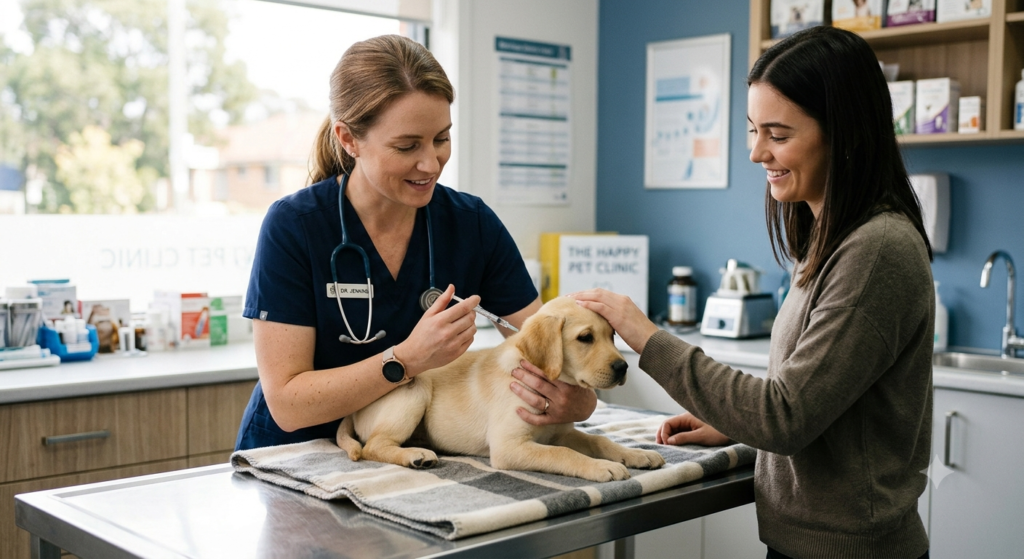

Bringing home a puppy is one of the most exciting moments for any family, and it comes with a short but important checklist. At the top of that list sits vaccination. At South Etobicoke Animal Hospital, new puppy owners often arrive with the same question: when do the shots start, and when are they finished? This guide walks through the puppy vaccination schedule from the first visit through the one-year booster, so you know exactly what to expect and why each stage matters.
Why Puppy Vaccinations Matter So Much
Puppies are born with limited natural immunity. They receive some protective antibodies from their mother’s first milk, but that protection fades within weeks and leaves a gap before the puppy’s own immune system takes over. Diseases like parvovirus and distemper spread easily in parks, sidewalks, and anywhere unvaccinated dogs gather, and both can be fatal in young dogs. A properly timed vaccination series closes that immunity gap before your puppy is exposed to serious risk.
Vaccinations also protect the wider dog population. When most puppies in a community are vaccinated on schedule, outbreaks of preventable disease become far less likely, which benefits every dog your puppy will ever play with at the park or the groomer.
Core vs Non-Core Vaccines: What Is the Difference
Veterinarians divide vaccines into two categories, and understanding the difference helps you make sense of your puppy’s treatment plan.
Core Vaccines Every Puppy Needs
Core vaccines protect against diseases that are widespread, severe, or dangerous to public health, and every puppy should receive them regardless of lifestyle. These typically include:
- Canine distemper virus
- Canine parvovirus
- Canine adenovirus (hepatitis)
- Rabies
Joint preventive care guidelines published by the American Animal Hospital Association and the American Veterinary Medical Association list these core immunizations as a standard part of every dog’s preventive health plan.
Non-Core Vaccines Based on Lifestyle
Non-core vaccines are recommended based on a puppy’s environment, travel habits, and exposure risk. Common examples include Bordetella (kennel cough), canine influenza, and leptospirosis. A veterinarian will ask about dog park visits, boarding plans, and neighborhood wildlife before recommending any non-core vaccine, since a puppy that never leaves a quiet backyard has different needs than one heading to daycare twice a week.
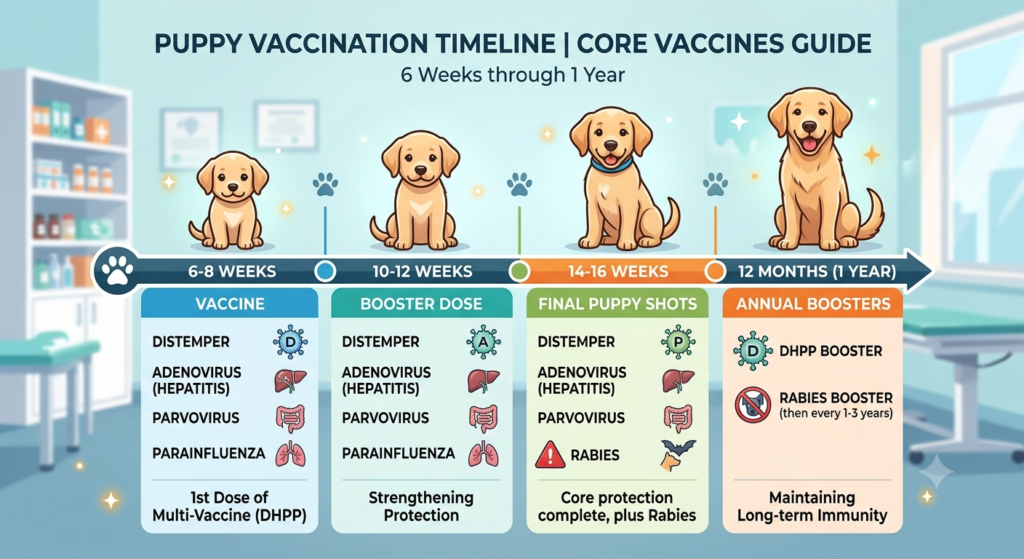
The Puppy Vaccination Schedule Week by Week
Most puppies follow a similar rhythm of visits during their first several months, though your veterinarian may adjust timing based on breed, health history, and local disease risk.
| Age | What Happens |
|---|---|
| 6 to 8 weeks | First round of core vaccines begins, along with a full physical exam |
| 10 to 12 weeks | Second round of core vaccines, plus discussion of non-core options |
| 14 to 16 weeks | Final puppy series and rabies vaccine, depending on provincial timing |
| 12 months | First annual booster and full wellness recheck |
6 to 8 Weeks: The First Shots
The first visit sets the tone for your puppy’s entire healthcare relationship. Along with the first vaccine dose, the veterinarian checks weight, heart and lung sounds, teeth, and general body condition, and screens for intestinal parasites common in young puppies.
10 to 12 Weeks: Building the Immune Response
A single vaccine dose rarely provides full protection in puppies because maternal antibodies can still interfere with the immune response. The second round reinforces protection and is timed to close the gap left by fading maternal immunity.
14 to 16 Weeks: Completing the Core Series
By this stage, maternal antibodies have typically cleared, allowing the final dose to generate strong, lasting immunity. In Ontario, rabies vaccination is required by law and is usually given during this window or shortly after.
The One-Year Booster
A year after the initial series, puppies return for a booster that confirms long-term protection. From this point forward, most core vaccines are boostered every one to three years depending on the specific vaccine and your veterinarian’s recommendation.
What to Expect After Each Vaccine Visit
Mild, short-lived reactions are common and generally resolve within a day. These can include:
- Slight soreness at the injection site
- Mild lethargy or reduced appetite
- Low-grade warmth at the injection area
Contact your veterinary team right away if you notice facial swelling, repeated vomiting, hives, or difficulty breathing, since these can indicate a more serious allergic reaction that needs prompt attention. The Merck Veterinary Manual notes that modern vaccines are considered safe overall, while acknowledging that injection site reactions and rare allergic responses can occur and should always be reported to your veterinarian.
Common Vaccination Mistakes New Puppy Owners Make
- Skipping a dose because the puppy “seems fine.” Immunity builds in stages, and missing a round can leave a real gap in protection.
- Assuming one shot covers everything. Core and non-core vaccines address different risks, and a single visit rarely completes the whole plan.
- Waiting too long between rounds. Spacing that stretches well beyond the recommended window can reduce the series’ effectiveness.
- Socializing too early in high-risk areas. Dog parks and pet stores are best avoided until the core series is far enough along, per your veterinarian’s guidance.
- Forgetting parasite prevention alongside vaccines. Vaccines protect against viral disease, but young puppies also need protection from fleas, ticks, and intestinal parasites, which is why many clinics pair vaccine visits with a parasite prevention plan.
Case Story: Bringing Milo’s Vaccination Series Up to Date
A local Etobicoke family adopted an eight-week-old rescue puppy named Milo with no prior medical records. The team at the clinic started fresh, running a physical exam and beginning the core vaccine series at the first visit while also screening for intestinal parasites. Over the following weeks, Milo returned for his second and third rounds on schedule, and his family used the visits to ask about socialization timing and safe places to introduce him to other dogs. By sixteen weeks, Milo had completed his core series and rabies vaccine, and his owners reported he was already comfortable with routine vet handling, a habit that pays off for the rest of his life. Stories like this are common for puppies who start their vaccination journey on time and stay consistent with each follow-up visit.
Puppy Vaccinations vs Titer Testing: Which Is Right for Your Puppy
Some owners ask whether titer testing, a blood test measuring existing antibody levels, can replace scheduled boosters. Here is how the two approaches compare.
| Factor | Standard Vaccination Schedule | Titer Testing |
|---|---|---|
| Cost of blood draw | Not required | Additional blood test needed |
| Turnaround | Immediate protection plan | Results take time to interpret |
| Best suited for | Puppies completing initial series | Adult dogs with full vaccine history |
| Legal rabies requirement | Meets provincial law | Does not replace legal rabies vaccination |
For puppies specifically, titer testing is not a substitute for the initial core series, since young puppies have not yet built the antibody levels a titer test is designed to measure. The Canadian Veterinary Medical Association backs the use of veterinarian-directed vaccine protocols to control infectious disease and recommends that decisions be made at the individual animal level as part of a full preventive care plan, which is exactly how titer testing fits in for older dogs later in life.
How to Prepare for Your Puppy’s Vaccination Visit
A little preparation makes each vaccine appointment smoother for both you and your puppy.
- Bring any prior records. If your puppy came from a breeder, shelter, or rescue, hand over whatever paperwork exists, even if it looks incomplete. Partial records still help your veterinarian build an accurate plan.
- Write down questions in advance. New puppy owners often think of questions about diet, crate training, or socialization only after they leave the appointment, so jotting them down beforehand ensures nothing gets missed.
- Note any recent symptoms. Loose stool, coughing, or unusual tiredness in the days before a visit is worth mentioning, since a mild illness can sometimes affect the timing of a vaccine dose.
- Keep your puppy calm before arrival. A short walk or a few minutes of play before the visit can help burn off nervous energy and make the exam easier for everyone.
- Ask about the full schedule, not just today’s dose. Understanding the next two or three visits in advance makes it easier to plan around work, travel, and family schedules.
Veterinary teams also use these early visits to build a puppy’s comfort with handling, which pays off during every future appointment, from routine checkups to more involved procedures later in life.
Bringing Your Puppy in for Their First Vaccination
If you recently welcomed a puppy and are searching for a puppy vet near me, the earlier the first visit happens, the sooner your puppy’s protection begins. Wellness visits at this stage combine vaccination with weight tracking, dental checks, and nutrition guidance through the clinic’s dog vaccinations near me program, so every visit does more than deliver a single shot.
Families searching for same day puppy vaccinations near me can schedule a visit directly online, and the team will confirm which stage of the series your puppy needs based on age and any prior records.
Frequently Asked Questions
-
When should a puppy get their first vaccination?
Most puppies receive their first core vaccine dose between six and eight weeks of age. This timing works around fading maternal antibodies while still offering early protection. Your veterinarian will confirm the exact start date based on your puppy’s health, breed, and background, especially for rescues without prior medical records. Starting on time keeps the rest of the series on a predictable, effective timeline.
-
How many vaccine visits does a puppy need in the first year?
Puppies typically need three core vaccine visits between six and sixteen weeks, spaced three to four weeks apart, followed by a one-year booster. Rabies is usually included during the final puppy round, depending on provincial requirements. Non-core vaccines may add extra visits depending on your puppy’s lifestyle. Your veterinarian will map out the full schedule at the first appointment.
-
Can a puppy vaccination be delayed if they seem healthy?
Delaying doses is not recommended even when a puppy appears healthy, since immunity builds gradually across the full series. Skipping or postponing a round can leave a window where maternal antibodies have faded but full protection has not yet developed. This gap is exactly when puppies are most vulnerable to diseases like parvovirus. Sticking to the recommended timeline gives the vaccine series its best chance of working as intended.
-
Is the rabies vaccine required by law in Ontario?
Yes, Ontario law requires dogs to be vaccinated against rabies, and this is usually completed during the later stage of the puppy series. The exact timing can depend on local regulations and your veterinarian’s recommendation. Keeping proof of rabies vaccination is also important for boarding, grooming, and travel. Your veterinary team will provide documentation once the vaccine is given.
-
What should I do if my puppy has a reaction after a vaccine?
Mild soreness, tiredness, or reduced appetite for a day is common and usually resolves on its own. Facial swelling, hives, repeated vomiting, or difficulty breathing are signs of a more serious reaction and require immediate veterinary attention. Keep your puppy calm and contact your veterinary team right away if any of these appear. Reporting reactions helps your vet adjust future vaccine choices if needed.
A puppy’s vaccination series is a short chapter in a much longer story of health, and getting it right from the very first visit sets the tone for everything that follows.