
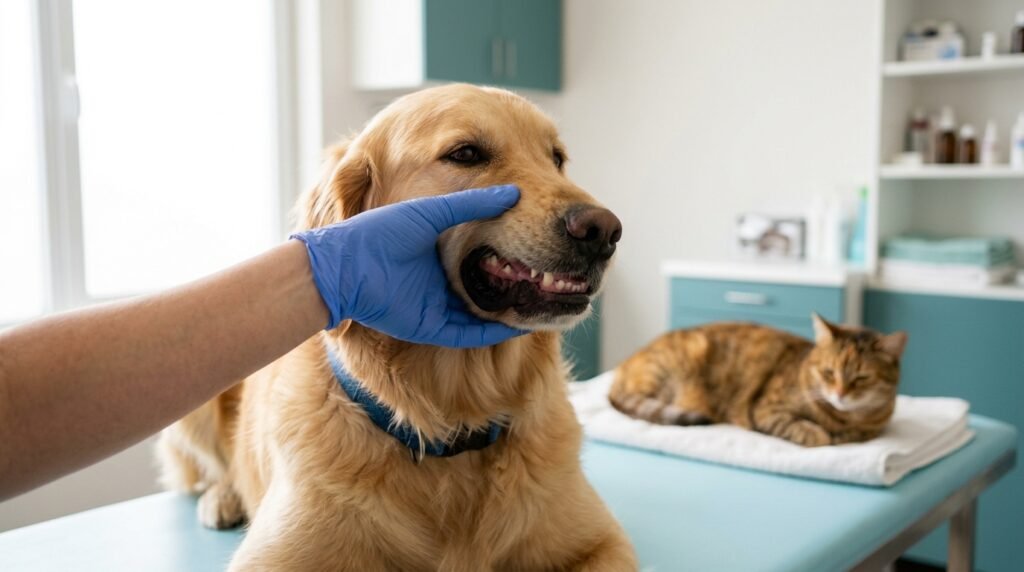

Most owners discover dental disease by accident: a sour whiff of breath during a cuddle, a cat suddenly chewing on one side, a dog who drops his favourite toy and walks away. By that point the damage below the gumline is usually further along than it looks. If you are looking for an animal hospital near me because something about your pet’s mouth seems off, this guide covers the early and advanced signs of dental disease in dogs and cats, how the problem differs between the two species, and how to judge whether your pet needs a routine check, a prompt appointment, or same-day care.
| Topic | Pet dental care and dental disease warning signs |
| Best for | Dog and cat owners in Etobicoke, Mimico, New Toronto and Long Branch |
| Reading time | About 10 minutes |
| Last updated | October 2026 |
Why Dental Disease in Pets Is So Easy to Miss
Dental disease is the most common health problem veterinarians find in adult dogs and cats, and also one of the quietest. The American Veterinary Medical Association says most pets already show early evidence of periodontal disease by age three. The Merck Veterinary Manual puts the numbers even earlier: up to 80% of dogs and 70% of cats have some level of periodontal disease by age two.
How Plaque Turns Into Periodontal Disease
Plaque is a soft film of bacteria that coats the teeth after every meal. Left for more than a couple of days, it hardens into tartar, which holds even more plaque and pushes bacteria under the gumline.
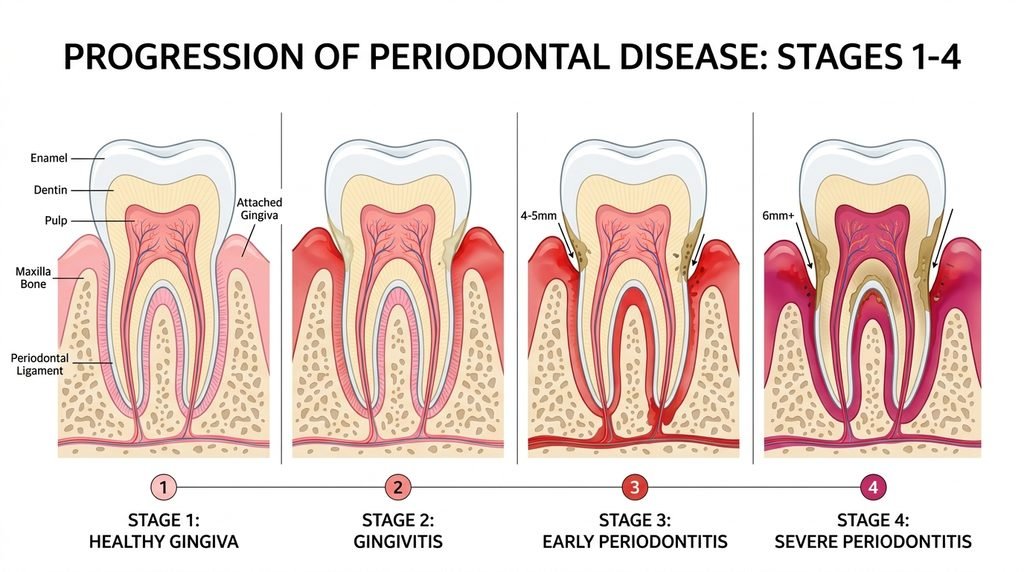
The gums react first with inflammation (gingivitis), which is still reversible. If it continues, infection breaks down the ligament and bone anchoring each tooth. That stage is periodontitis, and lost bone is not easily rebuilt.
Why Dogs and Cats Hide Mouth Pain
Pets rarely stop eating because of a sore tooth. Hunger wins over discomfort, so most animals keep eating and quietly change how they eat. A dog may swallow kibble whole instead of crunching it. A cat may chew only on one side or leave the harder pieces in the bowl.
These shifts are easy to write off as quirks, which is why routine veterinary dentistry checks catch far more disease than waiting for an obvious problem.
Early Signs of Dental Disease in Dogs and Cats
Early disease is the easiest and least invasive to treat. These are the signs to watch for at home.
Bad Breath That Lingers
“Dog breath” is common, but it is not normal. Persistent foul odour usually means bacteria are building up along or under the gumline. Breath that smells sweet or fruity, or like ammonia, can point to problems outside the mouth, such as diabetes or kidney disease, and should be checked promptly.
Yellow or Brown Tartar at the Gumline
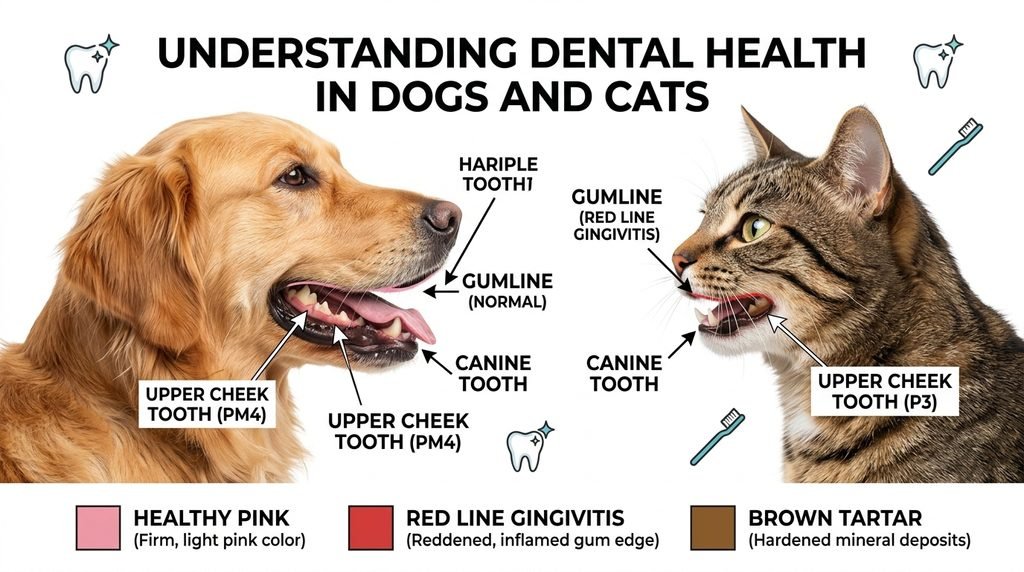
Lift your pet’s lip and look at the back teeth, especially the large upper cheek teeth. A yellow or brown crust where the tooth meets the gum is tartar. The amount you can see does not always match what is happening underneath, but heavy tartar almost always comes with inflamed gums.
Red, Swollen or Bleeding Gums
Healthy gums are pale pink (or naturally pigmented in some breeds) and sit snugly against the teeth. A thin red line along the gumline is often the first visible sign of gingivitis. Gums that bleed when your pet chews a toy, or pink tinges in the water bowl, mean the inflammation is active.
Advanced Signs: Pain, Infection and Tooth Loss
The following signs usually mean disease has moved below the gumline. They call for an appointment soon rather than at the next annual visit.
Changes in How Your Pet Eats
- Chewing on one side of the mouth
- Dropping food, or kibble falling out while eating
- Swallowing food whole or suddenly preferring soft food
- Approaching the bowl with interest, then walking away
- Weight loss with no other explanation
Drooling, Pawing and Face Rubbing
New drooling, especially if thick or blood-tinged, is a red flag. So is pawing at the mouth, rubbing the face on the floor, or pulling away when you touch the muzzle.
Loose, Broken or Discoloured Teeth
A tooth that moves, a chipped edge, or a tooth that has turned grey, purple or brown all need attention. Discolouration often means the pulp inside has been bruised or has died. A fractured tooth with a pink or dark dot in the centre has an exposed pulp, which is painful and gives bacteria a direct route to the root.
Facial Swelling or a Draining Spot Below the Eye
In dogs, an infected root of the large upper chewing tooth can cause swelling just under the eye. Sometimes it bursts and drains. Owners often mistake it for an eye problem or an insect bite. Any facial swelling should be seen the same day.
Dental Disease in Dogs vs Cats: What Differs
Both species get periodontal disease, but the patterns and the warning signs are not the same.
| Feature | Dogs | Cats |
|---|---|---|
| Most common problem | Periodontal disease | Periodontal disease and tooth resorption |
| Higher-risk groups | Toy and small breeds, flat-faced breeds, seniors | Adult and senior cats, overweight cats |
| Typical injury | Fractured teeth from chewing hard objects | Broken canine teeth after falls |
| How pain shows | One-sided chewing, dropped toys, head-shyness | Hiding, less grooming, irritability, head tilt while eating |
| Condition unique to the species | Retained baby teeth in small breeds | Stomatitis (widespread mouth inflammation) |
| Sign owners often miss | Swelling below the eye from a root abscess | A small pink spot at the gumline |
Dental Problems Common in Dogs
Toy and small breeds such as Yorkshire Terriers, Chihuahuas, Pomeranians and Maltese carry a full set of teeth in a small jaw. Crowding traps plaque, so these dogs often need professional dog teeth cleaning earlier and more often than larger breeds. Flat-faced breeds like Pugs and Shih Tzus have the same problem.
Puppies should lose their baby teeth by about six months. A baby canine still sitting beside the adult one traps food and should be checked.
Hard chews break a lot of teeth. A simple test: if your thumbnail cannot dent a chew, it is hard enough to fracture a tooth. Antlers, bones and hooves are the usual culprits.
Dental Problems Common in Cats
Cats have a painful condition that dogs rarely get. According to the Cornell Feline Health Center, 30% to 70% of cats show some sign of tooth resorption, where the body breaks down the tooth structure itself. It often starts as a small pink spot at the gumline, and affected teeth are usually extracted because the process cannot be stopped. Stomatitis, a severe inflammation of the mouth lining, is another painful feline condition that often requires multiple extractions.
Cats also mask pain better than dogs. Look for behavioural signs: a greasy or matted coat from reduced grooming, more hiding, or irritability when you touch the head. Any of these is reason enough to book a cat dental exam, followed by cat teeth cleaning if the exam confirms disease.
The Four Stages of Periodontal Disease
Veterinarians grade periodontal disease on a scale set out by the American Veterinary Dental College. Knowing the stages helps you understand what your vet means after an exam.
| Stage | What you may notice | What is happening below the gumline | Typical outcome |
|---|---|---|---|
| Stage 1: Gingivitis | Red gumline, mild odour | Inflammation only, no bone loss | Reversible with cleaning and home care |
| Stage 2: Early periodontitis | Bad breath, visible tartar | Under 25% loss of tooth support | Cleaning, close monitoring |
| Stage 3: Moderate periodontitis | Gum recession, bleeding, chewing changes | 25% to 50% loss of tooth support | Some teeth may need treatment or extraction |
| Stage 4: Advanced periodontitis | Loose teeth, pus, strong odour, pain | Over 50% loss of tooth support | Extraction of affected teeth |
When to See a Vet: Routine, Soon or Same Day
Not every dental sign is an emergency, but some cannot wait. Use this as a general guide, and call if you are unsure.
| Urgency | Signs | Next step |
|---|---|---|
| Routine | Mild breath odour, light tartar, pet eating normally | Raise it at the next yearly exam |
| Book soon (within one to two weeks) | Persistent bad breath, red gumline, heavy tartar, one-sided chewing, retained baby teeth, a pink spot on a cat’s tooth | Schedule a dental exam |
| Same day | Facial swelling, bleeding from the mouth, broken tooth with exposed pulp, jaw that will not close, mouth injury, refusing food for more than 24 hours | Call the clinic or go to urgent care |
Cats deserve extra caution with appetite loss. A cat that stops eating for more than a day or two can develop a serious liver condition, so a painful mouth in a cat is never a “wait and see” problem. If your pet has a swollen face or has stopped eating and your regular clinic cannot see them, search for an emergency vet near me rather than waiting it out.
What Happens When a Vet Checks for Dental Disease
A dental assessment happens in two parts: a quick look while your pet is awake, and a complete exam under anesthesia if treatment is needed.
The Awake Oral Exam
Every annual wellness exam should include a look inside the mouth. Your vet lifts the lips, checks gum colour and tartar, looks for broken or discoloured teeth, and feels the jaw and the lymph nodes under the chin. This gives a working grade, but it cannot show what is happening under the gumline, where a large part of each tooth sits.
Bloodwork Before Anesthesia
Before any procedure, pre-anesthetic bloodwork checks kidney and liver function, red and white blood cells, and other values that affect how your pet handles anesthesia. These veterinary lab tests matter most for senior pets, who are also the ones most likely to need dental work.
Cleaning, Dental X-Rays and Treatment
A professional cleaning is done under general anesthesia with a technician monitoring vital signs throughout. The vet probes around every tooth, takes full-mouth dental X-rays, scales tartar from above and below the gumline, and polishes the surface smooth. Diseased teeth found on X-rays may be extracted in the same visit. Our page on dental cleaning in Etobicoke explains our approach to pet dental services in more detail.
If you want a step-by-step look at the day itself, read our guide to dog teeth cleaning and what to expect, or our breakdown of how long a dog dental cleaning takes from drop-off to pick-up.
Case Study: Rocky and the Breath Everyone Thought Was Normal
Rocky is a seven-year-old Schnauzer mix whose owner, Michelle, assumed his terrible breath was just part of being a dog. At his exam, the picture was different: brown tartar covered his teeth, his gums were inflamed and receding, and several teeth showed signs of infection.
What the team found and did
- Pre-anesthetic bloodwork confirmed Rocky was a good candidate for anesthesia
- A full oral exam and dental X-rays mapped the damage below the gumline
- Healthy teeth were scaled and polished
- Four diseased teeth were extracted
- Rocky went home the same day with pain medication and antibiotics
The result
Within a week Rocky was eating better and had more energy than he had shown in a long time. Michelle now brushes his teeth at home and keeps up with yearly professional cleanings. In her words: “It was like he was a younger dog.”
Rocky’s story is a common one. Bad breath was the only sign his owner noticed, and it was the tip of severe periodontal disease. You can read more patient stories from our Etobicoke veterinary hospital.
Home Care That Slows Dental Disease
Home care cannot remove tartar once it forms, but it slows new plaque, stretches the time between professional cleanings, and helps keep gingivitis from returning.
| Method | How much it helps | Notes |
|---|---|---|
| Daily toothbrushing | Most effective | Every other day still helps; daily is ideal |
| Dental diets | Moderate | Kibble designed to scrub the tooth surface |
| Dental chews and water additives | Mild to moderate | Choose products with the VOHC seal |
| Hard bones, antlers, hooves | Not recommended | Common cause of fractured teeth |
Getting started with brushing
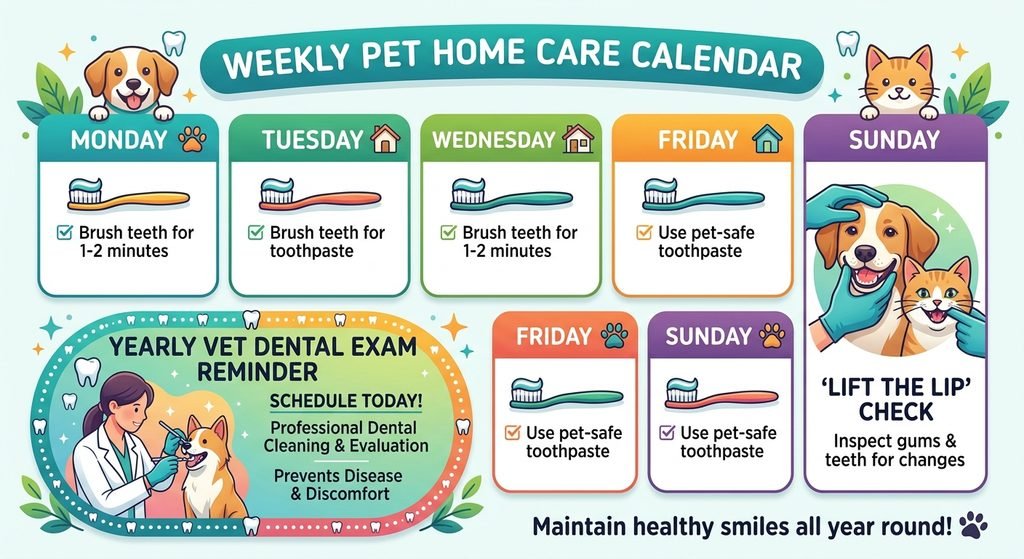
- Use a toothpaste made for pets. Human toothpaste can contain xylitol, which is toxic to dogs.
- Start with paste on your finger, then move to a soft brush over a week or two.
- Focus on the outer surfaces of the back teeth, where tartar builds fastest.
- Keep sessions short and end with a treat or play.
The Veterinary Oral Health Council lists chews, diets and rinses that have passed plaque and tartar trials. The Merck Veterinary Manual notes that disease tends to return after treatment unless home care changes, so the habit matters as much as the cleaning.
Book a Dental Check for Your Dog or Cat
Whether you found us by searching for dog teeth cleaning near me or for Toronto pet dental care closer to home, the first step is the same: an exam is the only way to know what is happening below the gumline. Our team at South Etobicoke Animal Hospital, 741 The Queensway, provides complete animal dental care for dogs and cats, from awake oral checks to cleanings, X-rays and extractions. Call +1 (416) 201-9123, email petcare@southetobicokeanimalhospital.ca, or book an appointment online.
Frequently Asked Questions About Dental Disease in Dogs and Cats
-
How often should a vet check my pet’s teeth?
Most dogs and cats should have their teeth checked at least once a year during a wellness exam. Toy breeds, flat-faced breeds, senior pets and cats with a history of tooth resorption often need checks every six months, because disease in these groups progresses faster. Your vet will recommend a schedule based on what they see in the mouth, your pet’s age, and how much home care you can manage. Catching gingivitis early keeps treatment simple.
-
Is bad breath in dogs and cats ever normal?
Mild odour right after eating is normal, but persistent bad breath is not. Strong, lingering odour is one of the earliest signs of plaque and bacteria building up around the gumline, and it often appears before you see red gums or heavy tartar. Breath that smells sweet, fruity or like ammonia may point to diabetes or kidney problems instead. In either case, bad breath that does not go away is worth a veterinary visit rather than a breath freshener.
-
Can dental disease in pets be reversed?
Gingivitis, the first stage, can be reversed. A professional cleaning followed by regular brushing usually brings inflamed gums back to health. Once the disease reaches periodontitis and starts destroying the bone and ligament around the teeth, that loss is not easily rebuilt. Treatment then focuses on stopping further damage, cleaning deep pockets, and extracting teeth that can no longer be saved. This is why early detection makes such a difference to your pet’s comfort.
-
Can my pet’s teeth be cleaned without anesthesia?
Anesthesia-free cleaning only scrapes tartar off the visible part of the tooth. It cannot clean below the gumline, where periodontal disease actually does its damage, and it does not allow dental X-rays or a proper probe of each tooth. Veterinary dental specialists advise against it because it can hide disease while making teeth look clean. A safe procedure under general anesthesia, with bloodwork and monitoring, is the standard for proper pet dental cleaning.
-
Where can I find pet dental care near me in Etobicoke?
If you are searching for pet dental near me in South Etobicoke, our clinic at 741 The Queensway serves dogs and cats from Mimico, New Toronto, Long Branch and nearby Toronto neighbourhoods. We provide awake dental exams, pre-anesthetic bloodwork, digital dental X-rays, professional cleanings and extractions in one place. Call +1 (416) 201-9123 or email petcare@southetobicokeanimalhospital.ca to arrange a dental assessment for your pet.
A healthy mouth is one of the simplest ways to give your dog or cat more comfortable years, and it starts with lifting the lip.