
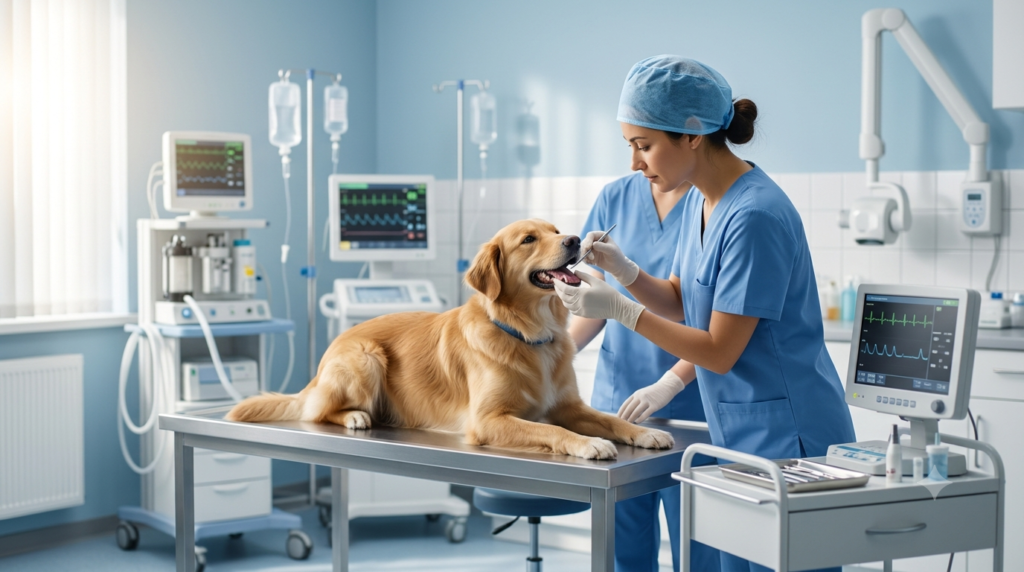

When a veterinarian recommends a professional dental cleaning, most pet owners have the same first question: how long is this actually going to take? At South Etobicoke Animal Hospital, that question comes up almost every time dental work is discussed, and the honest answer depends on more than just the cleaning itself. This guide walks through the full appointment from drop-off to pick-up, step by step, so you know exactly what a dental cleaning day looks like for your cat or dog.
Why Pet Dental Cleaning Takes a Full Appointment, Not a Quick Stop
A professional cleaning is not comparable to a human dentist visit where you sit in a chair for twenty minutes. Pets cannot hold still or open their mouths on command, so general anesthesia is required to clean below the gumline where most dental disease actually lives. The American Veterinary Dental College is consistent on this point: anesthesia-free cleanings only address the visible surface of the teeth and provide no real benefit to a pet’s oral health, since the disease process happens beneath the gum where it cannot be reached or seen without sedation. The American Veterinary Medical Association takes the same position, noting that dental cleanings performed without anesthesia risk injury to the pet and still miss the areas where periodontal disease actually begins. That single fact is why a dental cleaning appointment takes a full day rather than a quick in-and-out visit.
Step-by-Step: What Happens During a Professional Pet Dental Cleaning
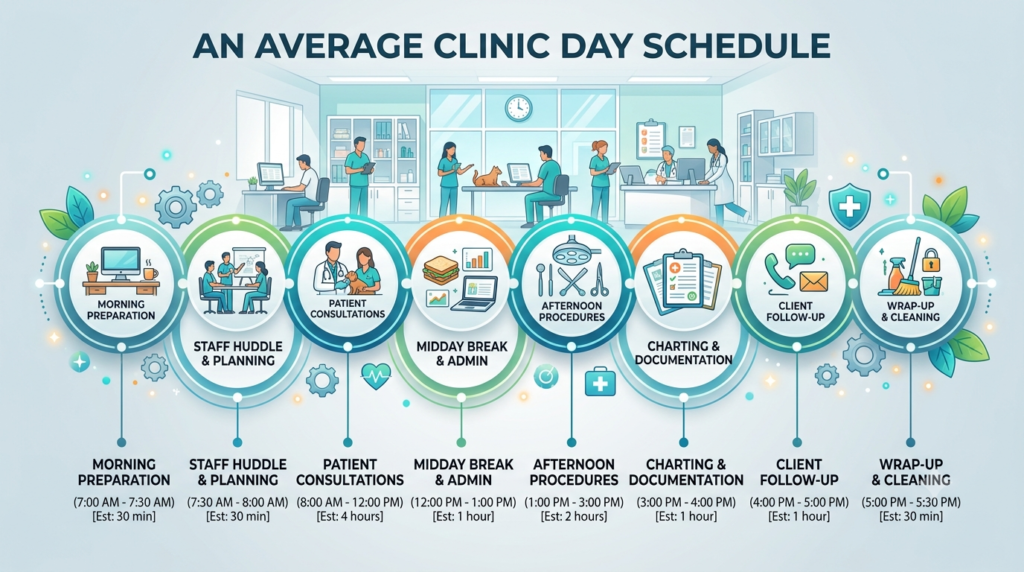
Here is the order of events for a typical dental cleaning day, along with a rough sense of how long each stage takes.
Step 1: Morning Drop-Off and Check-In
Most dental patients are dropped off early in the morning, usually with an overnight fast already in place. Check-in itself takes only a few minutes, but this is when the team confirms fasting status and reviews any medications your pet is currently taking. Fasting matters more than most owners realize, since food in the stomach during anesthesia increases the risk of regurgitation and aspiration, so being upfront about any sneaky treats the night before genuinely helps your veterinary team plan the day safely.
Step 2: Pre-Anesthetic Exam and Bloodwork
Before anything else happens, your pet gets a physical exam and bloodwork to confirm organ function can safely handle anesthesia. Results from the in-house lab are typically available within twenty to thirty minutes, which lets the veterinary team move forward the same morning rather than delaying the procedure to another day.
Step 3: Anesthesia Induction and Monitoring Setup
Once bloodwork is cleared, a catheter is placed for anesthesia and fluids, and your pet is gently induced and intubated with a breathing tube. Monitoring equipment tracking heart rate, oxygen saturation, blood pressure, and body temperature is connected before any dental work begins. This setup phase generally takes about fifteen minutes.
Step 4: Full Oral Exam and Dental X-Rays
With your pet safely under anesthesia, the veterinarian performs a complete tooth-by-tooth exam, probing each tooth and measuring for pockets or attachment loss. Full-mouth digital dental X-rays follow, revealing anything happening below the gumline such as root abscesses or bone loss that a visual exam alone would miss entirely. Research from Cornell University’s College of Veterinary Medicine notes that a large majority of dogs over the age of three already show some degree of periodontal disease even when their teeth still look reasonably clean, which is exactly why this diagnostic step matters as much as the cleaning itself. This diagnostic phase typically runs twenty to forty minutes, longer if the veterinarian needs to review multiple angles on a questionable tooth.
Step 5: Scaling and Polishing
Ultrasonic scaling removes tartar from above and below the gumline on every tooth, followed by polishing to smooth the enamel surface. Smooth teeth resist new plaque buildup better than rough ones, which is part of why polishing is not just cosmetic. For a straightforward cleaning with no extractions, this stage is often the shortest part of the whole procedure.
Step 6: Extractions, If Needed
If the X-rays or exam reveal teeth that cannot be saved, extractions happen next. This is the single biggest variable in total appointment time, since a single simple extraction adds a few minutes while a fractured or multi-rooted tooth can take considerably longer. According to the Merck Veterinary Manual, periodontal disease is graded on a staged scale based on the amount of bone loss present around each tooth, and teeth with advanced attachment loss are typically not salvageable regardless of how healthy they may still look above the gumline. This is part of why owners are sometimes surprised to learn a tooth needed removal even though it never looked obviously broken or discolored at home.
Step 7: Recovery and Waking Up
Once the dental work is finished, anesthesia is stopped and your pet is moved to a recovery area for close monitoring while waking up. Most pets are alert within thirty minutes to an hour, though grogginess can linger longer.
Step 8: Pick-Up and Discharge Instructions
Before you take your pet home, the veterinary team walks through what was found, what was done, and any home care instructions, including pain medication schedules and feeding guidance for the rest of the day.
How Long Does Pet Dental Cleaning Actually Take?
Owners often want a single number, but the honest answer is that total time depends heavily on what the veterinary team finds once your pet is under anesthesia.
How Long Does Cat Dental Cleaning Take
For a cat with healthy teeth and no extractions needed, a professional cleaning from induction to finished polishing typically runs about forty-five minutes to an hour. Cats are prone to a condition called tooth resorption, which is not always visible without X-rays, so the diagnostic phase carries real weight in total appointment time even when the cleaning portion itself is brief.
How Long Does Dog Teeth Cleaning Take
Dog dental cleaning duration varies more with size and breed than cat cleanings do. A small dog with minimal tartar might be finished in under an hour, while larger dog teeth cleaning, sometimes described by owners searching for k9 teeth cleaning, can run closer to ninety minutes simply because there are more tooth surfaces to scale, polish, and evaluate.
What Adds Time: Extractions and X-Rays
Regardless of species, the two factors that most reliably extend appointment length are the number of extractions needed and how much time full-mouth X-rays take to capture and review. A cleaning with two or three simple extractions might add thirty minutes, while advanced periodontal disease requiring multiple extractions across the mouth can extend a procedure well past two hours.
Pet Dental Cleaning Duration by Scenario
| Scenario | Typical Procedure Time | Anesthesia Recovery | Restricted Activity |
|---|---|---|---|
| Routine cleaning, no extractions | 45 to 75 minutes | 30 to 60 minutes | Minimal, quiet day |
| Cleaning with 1 to 3 extractions | 75 to 120 minutes | 1 to 2 hours | 3 to 5 days soft food |
| Advanced periodontal disease, multiple extractions | 2 to 3+ hours | 2 to 3 hours | 7 to 10 days soft food |
As the table shows, the cleaning itself is rarely what stretches an appointment long. It is almost always the diagnostic findings, particularly hidden disease revealed on X-rays, that determine how the rest of the day unfolds.
A Case Snapshot: One Appointment From Start to Finish
A recent patient, a six-year-old terrier mix booked in for a routine cleaning, offers a fairly typical example of how these variables play out. Bloodwork came back clear within half an hour of drop-off, and induction followed shortly after. The oral exam and X-rays revealed two fractured premolars that were not visible during the awake exam, which added roughly forty minutes of extraction time beyond the original cleaning estimate. He was awake and alert within forty-five minutes of the procedure ending and went home the same afternoon with a soft food diet for five days. This kind of mid-appointment adjustment, where X-rays reveal something the exam alone could not, is common enough that owners should expect some flexibility in pick-up time rather than an exact hour.
After the Appointment: What Recovery Looks Like at Home
Most pets are groggy for the rest of the day and more interested in sleeping than eating. Soft or moistened food is usually recommended for several days, longer if extractions were performed, and any prescribed pain medication should be given exactly as directed even if your pet seems comfortable. Watch for reduced appetite lasting more than a day, pawing at the mouth, or reluctance to let you near the face, since these can signal discomfort that needs a follow-up call rather than waiting it out. Most pets bounce back to their normal eating habits within a few days of a routine cleaning, and noticeably fresher breath is often the first thing owners mention once recovery is complete. For readers who want a deeper look at recognizing dental disease symptoms and understanding anesthesia safety protocols in more detail, our earlier guide on cat teeth cleaning covers that ground thoroughly.
How Often Pets Need Professional Dental Cleaning
Most healthy adult dogs and cats benefit from a professional cleaning once a year, though pets with faster tartar buildup or existing periodontal disease may need cleanings every six to nine months. This is typically discussed as part of a regular pet wellness exam, where your veterinarian can assess tartar accumulation and gum health before it progresses into something requiring extractions. Daily brushing at home between professional cleanings remains the single most effective way to slow tartar buildup and stretch the interval between visits.
If you are weighing whether it is time to book a cleaning, our team offers thorough dental cleaning Etobicoke assessments that include a full oral exam before anesthesia is ever discussed, so you know what to expect before committing to a date.
Frequently Asked Questions About Pet Dental Cleaning Timing
-
How long does a cat dental cleaning take?
A straightforward cat dental cleaning with no extractions typically takes forty-five minutes to an hour from induction to finished polishing. Cats are prone to tooth resorption, a condition often invisible without X-rays, so the diagnostic portion of the appointment can matter as much as the cleaning itself. Total time at the clinic, including check-in and recovery, usually spans most of the day.
-
How long does dog teeth cleaning take?
Dog teeth cleaning duration depends heavily on size and the amount of tartar present. Smaller dogs with minimal buildup are often finished within an hour, while larger breeds can take closer to ninety minutes simply due to having more tooth surfaces to scale and evaluate. Any extractions found during the exam will extend that estimate further.
-
How long is a k9 teeth cleaning if extractions are needed?
Extractions are the biggest variable in total appointment length. A single simple extraction might add fifteen to thirty minutes, while multiple or fractured teeth can extend a k9 teeth cleaning well past two hours. Your veterinary team will call partway through the procedure if significant extractions are needed so you understand the revised timeline.
-
How long does recovery take after a pet dental cleaning?
Most pets are alert within thirty minutes to an hour after anesthesia is stopped, though grogginess can linger for the rest of the day. If extractions were performed, soft food and restricted chewing are typically recommended for three to ten days depending on how many teeth were removed and how extensive the sites were.
-
How often should my pet get a professional dental cleaning?
Most healthy adult dogs and cats benefit from a professional cleaning about once a year, though pets with faster tartar buildup or existing gum disease may need cleanings every six to nine months. Your veterinarian will recommend a specific interval based on what they observe during routine oral exams between cleanings.
If you are wondering how long your pet’s next dental cleaning might take, reach out to the team at South Etobicoke Animal Hospital using the vet clinic near me search or by calling the clinic directly, and we can walk you through what to expect based on your pet’s specific needs.