
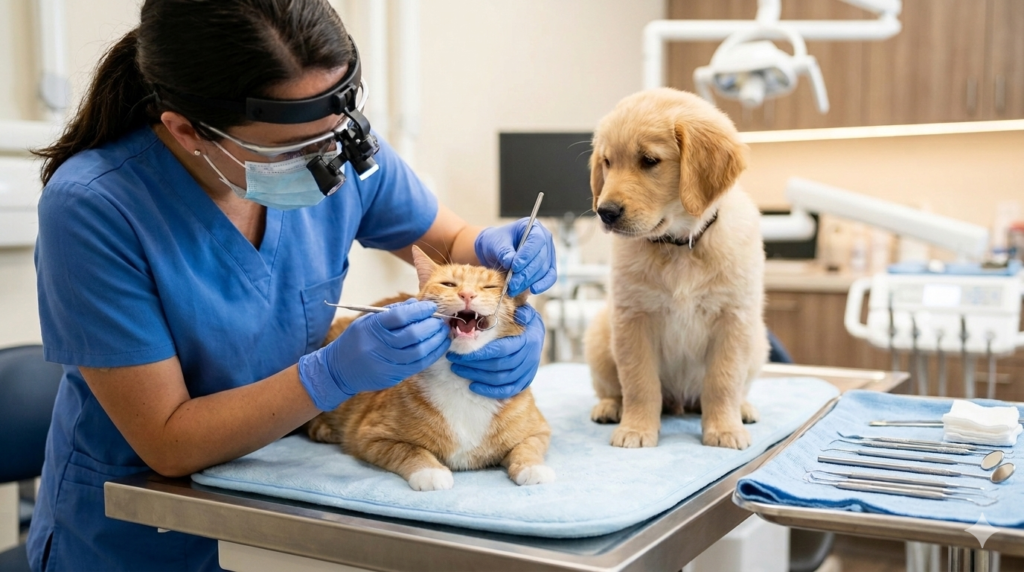
Most pet owners are pretty good about keeping up with vaccinations and annual checkups. But dental care? That is the one thing that slips through the cracks more often than almost anything else in veterinary medicine.
Here is a number that usually gets people’s attention: by the age of three, roughly 80 percent of dogs and 70 percent of cats already have some form of periodontal disease. The reason is simple — cats and dogs are hardwired to hide pain. A cat with a fractured molar will keep eating. A dog with an abscessed tooth will still greet you at the door with a wagging tail. By the time you notice something is off, the problem has usually been brewing for months. That is why regular cat teeth cleaning and dog teeth cleaning matters, and why understanding the process can take a lot of the anxiety out of booking that first appointment. At South Etobicoke Animal Hospital, our veterinary team performs professional pet dental cleanings regularly, and this guide walks you through exactly what happens before, during and after the procedure.
Why Pet Dental Health Is Not Something You Can Afford to Ignore
Dental disease in cats and dogs is not just an oral problem. Left unchecked, bacteria from infected gums and decaying teeth enter the bloodstream through the rich network of blood vessels in the mouth. From there, those bacteria can travel to the heart, the kidneys and the liver, causing damage that accumulates silently over years. Veterinary cardiologists have long observed a link between chronic periodontal disease and endocarditis — an infection of the heart valves — particularly in older dogs. Kidney disease in senior cats is another condition where chronic oral infection is increasingly recognised as a contributing factor.
And then there is the pain itself. A cat with resorptive lesions — a condition where the body actually breaks down its own tooth structure — is living with what veterinary dentists describe as one of the most painful conditions in feline medicine. These cats rarely stop eating altogether. They might chew on one side, swallow kibble whole or become slightly pickier about food texture. The signs are subtle, and unless you know what to look for, they are easy to miss.
For dogs, fractured teeth from chewing hard objects, advanced gingivitis and heavy tartar deposits that push bacteria deeper below the gumline are all far more common than most owners guess. The good news is that professional dental cleaning, performed at the right intervals, can prevent the vast majority of these problems from ever reaching a critical stage.
Signs Your Cat or Dog Needs a Professional Teeth Cleaning
Recognising signs of dental disease in cats and dogs early is one of the most valuable things you can do as a pet owner. Bad breath is usually the first thing people notice, and while it is easy to dismiss as just “dog breath,” persistent foul odour from the mouth is almost always a sign that bacteria have set up camp along or below the gumline. Healthy mouths do not smell bad.
Visible tartar is another obvious indicator. Lift your pet’s lip and look at the outer surface of the back teeth. If you see a yellowish-brown crust along the gumline, that is mineralised plaque that cannot be removed by brushing alone. It needs professional scaling under anaesthesia.
Other warning signs include red or swollen gums, drooling more than usual, pawing at the face, reluctance to chew hard food, dropping food while eating, and facial swelling especially below the eye or along the jawline. Cats may also become withdrawn, groom less frequently or show irritability when touched around the head.
If you are noticing any of these symptoms, it is worth scheduling an examination. You can book an appointment at our Etobicoke clinic online or by calling +1 (416) 201-9123.
What the Dental Cleaning Procedure Looks Like at SEAH, Step by Step
Pre-Dental Examination and Bloodwork
Every dental cleaning begins with a thorough physical examination. Your veterinarian assesses overall health, listens to the heart and lungs, and checks for any conditions that might affect how your pet responds to anaesthesia. Pre-anaesthetic bloodwork is standard, and our in-house diagnostic laboratory delivers results within minutes. The panel checks liver and kidney function, blood cell counts and clotting ability. For older pets or those with known health conditions, additional screening may be recommended.
Anaesthesia and Monitoring
Once the bloodwork is clear, a catheter is placed in a front leg vein for administering anaesthetic drugs and intravenous fluids. Your pet is then gently induced and intubated with a breathing tube to deliver oxygen and anaesthetic gas throughout the cleaning. From this point forward, heart rate, respiratory rate, blood pressure, oxygen saturation and body temperature are tracked in real time by a dedicated veterinary technician. This continuous monitoring is a non-negotiable part of every dental procedure at the clinic.
Digital Dental Radiographs
Before any cleaning instruments touch a tooth, the team takes a full set of digital dental radiographs. This is arguably the most important step in the entire process, because roughly 60 percent of tooth structure sits below the gumline where visual examination cannot reach. Digital dental X-rays reveal root abscesses, bone loss, resorptive lesions in cats, retained root fragments and other hidden problems. The dental care team at SEAH uses these images to plan any extractions or additional treatment that may be needed.
Scaling, Polishing and Extractions
An ultrasonic scaler removes tartar from every surface of every tooth, both above and below the gumline. Subgingival scaling — cleaning the pocket between the gum and the tooth root — is particularly important because that is where the most harmful bacteria accumulate. After scaling, each tooth is polished with a fine dental paste to smooth out microscopic scratches left by the scaler, which slows down future plaque adhesion.
If radiographs reveal severely diseased, fractured or mobile teeth, the veterinarian may recommend extraction. This decision is always based on what gives your pet the best long-term outcome. Our team follows the same careful surgical protocols used in all procedures at the clinic, including thorough pain management throughout.
Once the cleaning is complete, the anaesthetic gas is turned off and your pet wakes up in a quiet, warm recovery area. Most pets are ready to go home later the same day.
Is Anaesthesia Safe for Dental Cleaning? Addressing the Number One Concern
This is the single most common question pet owners ask, and it is completely understandable. But here is the clinical reality: anaesthesia is essential for a thorough dental cleaning, and modern veterinary anaesthesia is remarkably safe when proper protocols are followed.
Consider what the procedure involves. The veterinarian needs to examine every tooth surface, take radiographs with a sensor positioned inside the mouth, scale below the gumline, and potentially extract diseased teeth. None of that can be done safely on a conscious animal. A dog that flinches during subgingival scaling could end up with a lacerated gum. A cat that bites down on an X-ray sensor could fracture another tooth.
You may have come across advertisements for dog teeth cleaning without anesthesia near me or non-anaesthetic dental scraping services. It is worth understanding what those involve. These procedures scrape visible tartar from outer tooth surfaces while the pet is awake and restrained. They cannot address disease below the gumline, cannot take dental radiographs, and cannot treat teeth that actually need attention. Both the Canadian Veterinary Medical Association and the American Veterinary Dental College advise against them because they provide a false sense of security while real disease progresses underneath.
At SEAH, every anaesthetic event is tailored to the individual patient. Drug protocols are adjusted based on age, breed, weight, health status and bloodwork results. The statistical risk of a serious complication in a healthy, properly screened pet is extremely low.
Recovery and Aftercare: What to Do When You Get Home
Most cats and dogs bounce back from a dental cleaning faster than their owners expect. Your pet will be groggy for several hours after arriving home, which is normal. Keep the environment calm, and give them a comfortable resting spot away from other pets or energetic children.
Feeding can resume the same evening, but stick to soft food for the first day or two, especially if extractions were performed. Wet canned food, softened kibble or a bland diet of boiled chicken and rice all work well. If extractions were part of the procedure, your veterinarian will send home pain medication and possibly antibiotics. Give these exactly as directed — pain management after dental work is not optional.
Watch for any signs that might indicate a complication: excessive bleeding, refusal to eat for more than 24 hours, significant facial swelling or nasal discharge. These are uncommon, but they warrant a call to the clinic at +1 (416) 201-9123.
For long-term aftercare, daily brushing with a pet-safe enzymatic toothpaste is the gold standard. Dental diets, water additives and veterinary-approved chews also help slow plaque buildup between professional cleanings.
How Often Should Pets Get Their Teeth Professionally Cleaned?
There is no single answer that fits every pet. Small-breed dogs like Yorkies, Chihuahuas and Dachshunds are notorious for developing dental problems early due to jaw crowding. Many benefit from annual cleanings starting as young as one to two years of age. Larger dogs tend to accumulate tartar more slowly, though they are more prone to tooth fractures, and a cleaning every one to two years is often sufficient.
Cats are a mixed bag. Some sail through life with minimal dental issues, while others develop severe resorptive lesions or stomatitis that require frequent intervention. Persian and Siamese breeds tend to be overrepresented in veterinary dental clinics, but any cat can develop significant disease.
The bottom line is that pet dental cleaning should be part of your pet’s overall healthcare plan, not something you think about only when bad breath becomes unbearable. Your veterinarian can help determine the right schedule based on what they observe during wellness and preventive care visits.
Frequently Asked Questions About Pet Teeth Cleaning
-
How long does a dental cleaning take?
A straightforward cleaning without extractions typically takes about 45 minutes to an hour. If multiple extractions are needed, the procedure may take longer. Your pet will spend additional time in recovery before going home.
-
Can I just brush my pet’s teeth at home instead?
Home brushing is excellent for slowing down plaque accumulation, but it cannot remove tartar that has already mineralised. Think of it as brushing your own teeth between dental visits — it helps, but it does not replace professional care.
-
Is cat teeth cleaning different from dog teeth cleaning?
The basic procedure is the same, but there are species-specific differences. Cats are prone to resorptive lesions requiring careful radiographic evaluation and tend to have more delicate jaw structures. Dogs are more likely to present with fractured teeth and heavy external tartar. Both species benefit equally from professional care.
-
My pet seems perfectly fine. Do they still need a cleaning?
Pets are exceptionally good at hiding oral pain. An animal that appears to be eating normally may still have significant disease below the gumline. Professional examination and dental radiographs are the only reliable way to assess the true state of your pet’s oral health.
-
What if my pet has other health conditions?
Pre-anaesthetic bloodwork and a thorough physical exam allow your veterinarian to assess risk and adjust the protocol accordingly. Many pets with early kidney disease, heart murmurs or diabetes undergo dental cleanings safely with appropriate precautions. If you have concerns, reach out to our team and we can walk you through your pet’s specific situation.
Your Pet’s Mouth Deserves the Same Attention as the Rest of Their Body
Dental disease is one of the most preventable conditions in veterinary medicine, and yet it remains one of the most prevalent. A professional cat teeth cleaning or dog teeth cleaning performed by a skilled veterinary team is not a luxury — it is a fundamental part of keeping your pet healthy, comfortable and free from unnecessary pain.
If it has been a while since your pet’s last dental assessment, or if you have never had one done, now is the time. South Etobicoke Animal Hospital is located at 741 The Queensway, Etobicoke, ON M8Z 1M8. We are open Monday, Tuesday, Thursday and Friday from 12:00 PM to 10:00 PM, and Saturday and Sunday from 12:00 PM to midnight. Wednesday is closed. Call us at +1 (416) 201-9123 or email petcare@southetobicokeanimalhospital.ca to schedule your pet’s dental consultation.