
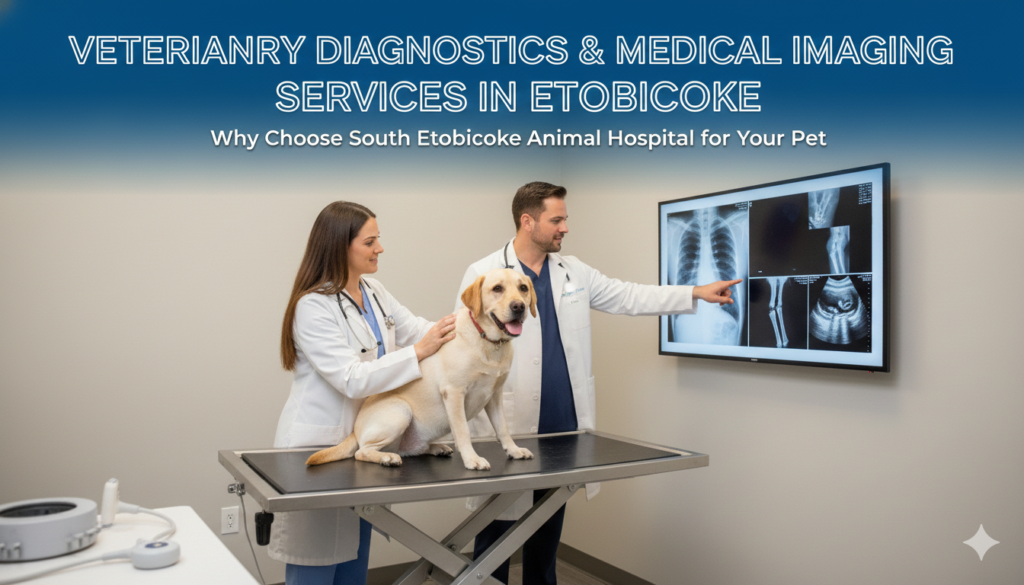
When your pet isn’t feeling well, the uncertainty can be overwhelming. You notice changes in behavior, appetite, or energy levels, but understanding what’s actually happening inside your pet’s body requires more than observation. That’s where advanced veterinary diagnostics and medical imaging become essential tools in protecting your pet’s health.
Modern veterinary medicine has come remarkably far in recent decades. The diagnostic capabilities available today allow veterinarians to see inside the body, analyze blood chemistry with precision, and detect diseases at stages when they’re most treatable. At South Etobicoke Animal Hospital, comprehensive diagnostic services transform guesswork into accurate diagnoses, leading to better outcomes for the pets we treat.
Understanding what diagnostic services are available and how they help your pet makes you a better advocate for your animal’s health. Let’s explore the world of veterinary diagnostics Etobicoke and why these services matter so much for your pet’s wellbeing.
Why Veterinary Diagnostics Matter More Than You Think
Your dog limps slightly after playing at the park. Your cat seems more tired than usual and hasn’t been eating as much. Your pet vomits once or twice but otherwise seems okay. These subtle changes might resolve on their own, or they could signal serious health problems that need immediate attention.
Veterinary diagnostics bridge the gap between symptoms you can see and underlying conditions that remain hidden. Animals instinctively hide signs of illness—a survival mechanism from their wild ancestors where showing weakness could make them targets for predators. By the time symptoms become obvious, diseases may have progressed significantly.
Early detection through diagnostic testing catches problems when treatment is most effective and least invasive. A simple blood test might reveal kidney disease in its early stages when dietary changes and medication can preserve organ function for years. Without that testing, the disease might not be discovered until the kidneys have lost most of their function and treatment options become limited.
The financial aspect matters too. Catching diseases early typically costs less than treating advanced illness. Prevention and early intervention save money while also giving your pet a better quality of life. Diagnostic services aren’t an unnecessary expense—they’re an investment in your pet’s long-term health.
Digital X-Ray: Seeing Inside Your Pet’s Body
When you think about medical imaging, X-rays probably come to mind first. This technology has been a cornerstone of medicine for over a century, but modern digital radiography represents a massive advancement over old film-based systems.
Digital X-ray technology at our animal health services facility provides immediate images that can be enhanced, manipulated, and shared electronically. Within seconds of taking an X-ray, your veterinarian can view high-quality images on a computer screen, zoom in on areas of concern, adjust contrast to highlight different tissues, and compare current images with previous ones to track changes over time.
What can X-rays diagnose? The list is extensive. Broken bones and fractures are obvious applications, but radiology near me services reveal so much more. X-rays show foreign objects that pets have swallowed, tumors and masses within the chest or abdomen, heart size and shape abnormalities, fluid accumulation in the lungs or abdomen, arthritis and joint problems, bladder stones and kidney abnormalities, and dental disease beneath the gum line.
Consider a common scenario: a dog presents with vomiting and abdominal pain. Physical examination suggests something is wrong, but X-rays reveal the specific problem—perhaps an intestinal obstruction from a swallowed toy, or possibly a tumor, or maybe just severe constipation. Each diagnosis requires completely different treatment, and X-rays provide the information needed to choose the right approach.
The digital nature of modern X-rays also means reduced radiation exposure compared to older systems. The images are stored electronically, making them easy to share with specialists if your pet needs referral for advanced care. If you move or switch veterinary clinics, images can be transferred digitally rather than carrying physical films.
Our veterinary team uses X-rays strategically, ordering them when they’ll provide valuable diagnostic information. Not every condition requires radiography, but when imaging is needed, having this capability in-house means faster diagnoses and quicker treatment decisions.
Ultrasound Imaging: A Window Into Soft Tissues
While X-rays excel at showing bones and certain organs, ultrasound imaging provides detailed views of soft tissues that radiography can’t match. This non-invasive technology uses sound waves to create real-time moving images of organs, blood vessels, and other internal structures.
The ultrasound clinic capabilities at our facility have solved countless diagnostic puzzles. Ultrasound excels at examining abdominal organs including the liver, kidneys, spleen, bladder, and intestines. It shows the heart in motion, allowing assessment of valve function and heart muscle contractions. It detects pregnancy and monitors fetal development. It identifies fluid accumulations, masses, and structural abnormalities that other imaging methods might miss.
Unlike X-rays, ultrasound involves no radiation. It’s completely safe and can be repeated as often as needed without any risk to the patient. Most pets tolerate the procedure well without sedation—they simply lie on a comfortable table while the veterinarian moves a small probe across their shaved abdomen or chest.
Real-time imaging means veterinarians can watch organs functioning as they examine them. The heart beating, blood flowing through vessels, intestines moving—this dynamic information provides insights that static images cannot. If your veterinarian needs to collect a sample from a mass or draw fluid from a specific area, ultrasound guidance makes these procedures much safer and more accurate.
One limitation of ultrasound is that it requires significant skill to perform and interpret correctly. The images aren’t always as intuitive as X-rays, and recognizing abnormalities requires training and experience. Our veterinary team has invested in both the equipment and the education necessary to provide high-quality ultrasound services for our patients.
In-House Diagnostic Testing: Results When You Need Them
Imagine bringing your sick pet to the veterinarian, having blood drawn, and then being told you’ll need to wait two or three days for results before treatment can begin. For some tests, external laboratory processing is necessary, but for many common diagnostics, having in-house testing capabilities changes everything about the speed and efficiency of care.
Our animal health laboratories equipment processes tests right here in our facility. Blood chemistry panels, complete blood counts, urinalysis, blood glucose monitoring, thyroid function tests, and various other common diagnostics provide results within minutes to hours rather than days. This rapid turnaround is particularly crucial for sick pets who need treatment decisions made quickly.
When a dog presents with vomiting and lethargy, in-house bloodwork can immediately reveal whether the problem is a simple stomach upset, kidney failure, pancreatitis, or another serious condition. Treatment begins based on accurate diagnostic information rather than educated guesses or waiting days for test results while the pet continues to suffer.
The quality of in-house laboratory equipment has improved dramatically in recent years. Modern analyzers provide results that rival reference laboratories for accuracy and reliability. Our equipment undergoes regular quality control checks and calibration to ensure the results we provide are dependable.
For specialized tests that require reference laboratory processing, we maintain partnerships with veterinary laboratories agency partners including IDEXX, Antech, and VARL. These partnerships give us access to virtually any diagnostic test available in veterinary medicine, from advanced infectious disease testing to genetic screenings and specialized hormone assays. Samples are collected at our clinic and sent overnight to these facilities, with results typically available within 24-48 hours.
Bloodwork & Urinalysis: Reading Your Pet’s Internal Chemistry
Blood tells stories. A few milliliters of blood analyzed properly reveals what’s happening with organ function, cell counts, electrolyte balance, protein levels, and numerous other parameters that indicate health or disease.
Complete blood count testing examines red blood cells, white blood cells, and platelets. Red blood cell counts reveal anemia or dehydration. White blood cell abnormalities indicate infection, inflammation, or immune system problems. Platelet counts affect blood clotting ability. Changes in these cells provide important clues about what’s affecting your pet.
Blood chemistry panels assess organ function and metabolic status. Kidney values show how well the kidneys filter waste from blood. Liver enzymes indicate liver health and function. Blood glucose levels diagnose diabetes or hypoglycemia. Electrolytes like sodium, potassium, and chloride must stay within narrow ranges for the body to function properly. Protein levels reflect nutritional status and various disease processes.
Pre-surgical bloodwork serves a critical safety function. Before anesthetizing any pet for surgery, our veterinary team performs blood testing to identify hidden problems that might increase anesthetic risk. A pet might seem healthy but have early kidney disease, liver problems, or anemia that affects how they metabolize anesthetic drugs. Discovering these issues before surgery allows veterinarians to adjust anesthetic protocols or postpone surgery until the underlying condition is addressed.
Urinalysis provides complementary information to bloodwork. Examining urine reveals kidney function details that blood tests miss, diagnoses urinary tract infections, detects diabetes and other metabolic disorders, identifies bladder stones or crystals, and monitors response to treatment for various conditions.
The combination of bloodwork and urinalysis gives veterinarians a comprehensive picture of what’s happening inside your pet’s body. These tests are particularly valuable for screening senior pets, monitoring chronic conditions, and investigating vague symptoms that don’t point to an obvious diagnosis.
Emergency Diagnostic Services: Fast Answers in Critical Situations
Veterinary emergencies demand rapid decision-making. When a pet presents in critical condition, every minute counts, and having immediate access to diagnostic capabilities can mean the difference between life and death.
Our extended hours—open until 10 pm on weeknights and midnight on weekends—combined with comprehensive diagnostic equipment means emergency patients receive fast, accurate diagnoses even late at night when other facilities are closed. A dog hit by a car needs X-rays immediately to check for internal injuries and broken bones. A cat in respiratory distress needs chest radiographs to determine if the problem is heart failure, pneumonia, or another serious condition. A pet suspected of eating poison needs bloodwork to assess organ function and guide treatment decisions.
Emergency diagnostic services at our facility include stat bloodwork processing, immediate X-ray imaging, rapid assessment capabilities, point-of-care testing for critical parameters, and coordination with emergency specialists when needed. The veterinary team working during evening and weekend hours has full access to all diagnostic equipment and the training to use it effectively.
Time-sensitive conditions like bloat, foreign body obstructions, internal bleeding, and acute kidney injury require immediate diagnosis and treatment. Having diagnostic services available in-house during emergency hours prevents dangerous delays that occur when pets must be transported to distant facilities or wait until morning for testing.
Consider a pet presenting late Saturday night with suspected bloat—a condition where the stomach fills with gas and can twist on itself, cutting off blood flow. This is a surgical emergency. X-rays taken immediately confirm the diagnosis, and surgery begins within the hour. Without in-house imaging available during weekend evenings, that pet might not survive the delay required to transport them elsewhere for diagnosis.
How Diagnostics Guide Treatment Decisions
Diagnostic testing serves multiple purposes throughout your pet’s healthcare journey. During wellness visits, screening tests establish baseline values when your pet is healthy. These baselines become valuable comparison points if illness develops later. Subtle changes that might seem normal in isolation become significant when compared to your pet’s previous values.
When illness strikes, diagnostics identify the specific problem causing symptoms. Many different diseases can cause similar signs—vomiting, for example, might result from dietary indiscretion, pancreatitis, kidney disease, liver disease, intestinal obstruction, or numerous other conditions. Each requires different treatment, and diagnostics guide veterinarians to the correct diagnosis.
During treatment, serial testing monitors response to therapy and watches for complications. A pet being treated for diabetes needs regular blood glucose checks to ensure insulin doses are appropriate. A cat receiving treatment for hyperthyroidism requires periodic bloodwork to monitor thyroid levels and kidney function. These monitoring tests ensure treatments are working and catch problems early if they develop.
The integration of multiple diagnostic modalities provides the most complete picture. Bloodwork might suggest kidney disease, ultrasound shows what the kidneys look like structurally, urinalysis reveals how well they’re concentrating urine, and blood pressure measurement assesses a common complication of kidney disease. Each piece of information contributes to understanding the complete situation and creating an effective treatment plan.
Comparing Veterinary Diagnostic Options: What Sets Our Services Apart
Not all veterinary clinics offer the same diagnostic capabilities. Some clinics have limited in-house testing and must send samples to external laboratories for most diagnostics. Others might have blood analyzers but lack imaging equipment. Understanding what’s available where you seek care helps you make informed decisions about your pet’s healthcare.
At South Etobicoke Animal Hospital, comprehensive diagnostic services mean your pet can receive complete diagnostic workups in one location. The convenience factor matters—you don’t need to visit multiple facilities or wait days for results that require immediate action.
Our investment in modern equipment reflects our commitment to providing high-quality care. Digital X-ray systems, ultrasound machines, and laboratory analyzers represent significant financial investments that not all practices can justify. We’ve made these investments because we believe pets deserve access to the same quality of diagnostic medicine that humans receive.
The veterinary team’s expertise in using and interpreting diagnostic tests is equally important as the equipment itself. Our veterinarians receive ongoing training in radiology interpretation, ultrasound technique, and laboratory result analysis. They stay current with advances in veterinary diagnostics and apply that knowledge to patient care.
Extended operating hours set our diagnostic services apart from many other facilities. Being open until 10 pm weeknights and midnight on weekends means diagnostic testing is available when emergencies occur, not just during traditional business hours. This accessibility has saved countless pets whose emergencies happened after other clinics closed.
Understanding Common Diagnostic Scenarios
Let’s walk through some typical situations where diagnostics play crucial roles in veterinary care. These examples illustrate how different testing modalities work together to solve clinical problems.
Scenario One: The Limping Dog A middle-aged Labrador Retriever starts limping on her right hind leg. Physical examination localizes pain to the knee area. X-rays reveal early arthritis in the joint and rule out broken bones or tumors. Bloodwork before starting anti-inflammatory medication ensures the liver and kidneys can safely process the drugs. The diagnosis is clear, treatment is appropriate, and the dog’s mobility improves within days.
Scenario Two: The Weight-Losing Cat An older cat loses weight despite eating well. Physical examination reveals a rapid heart rate and slightly enlarged thyroid glands. Bloodwork confirms hyperthyroidism—an overactive thyroid gland common in senior cats. Additional testing checks kidney function since treating hyperthyroidism sometimes unmasks underlying kidney disease. With accurate diagnosis, appropriate treatment begins, and the cat stabilizes.
Scenario Three: The Vomiting Puppy A young puppy vomits repeatedly and seems lethargic. Owners aren’t sure if he ate something he shouldn’t have. Abdominal X-rays show an unusual pattern suggesting intestinal obstruction. Ultrasound confirms a foreign object blocking the intestines. Bloodwork ensures the puppy is stable enough for anesthesia. Surgery removes a piece of chewed toy from the intestines, and the puppy recovers completely.
Scenario Four: The Senior Dog Wellness Exam A ten-year-old dog seems healthy during her annual exam. The owner reports no concerns. However, senior wellness bloodwork reveals early kidney disease and mild anemia. These findings aren’t causing obvious symptoms yet, but catching them early allows for dietary changes and monitoring that can slow disease progression and maintain quality of life much longer than if the disease went undetected until causing obvious illness.
These scenarios demonstrate how diagnostics provide information that physical examination alone cannot reveal, guiding appropriate treatment and sometimes catching serious problems before they become critical.
The Technology Behind Veterinary Diagnostics
Understanding the technology behind diagnostic services helps appreciate what these tools can do. Modern veterinary diagnostics rely on sophisticated equipment that rivals what’s available in human medicine.
Digital radiography uses specialized sensors that capture X-ray images electronically. These sensors are far more sensitive than old X-ray film, requiring less radiation to produce high-quality images. The digital format allows instant viewing, image manipulation to enhance details, electronic storage and sharing, and comparison with previous images displayed side by side.
Ultrasound technology emits high-frequency sound waves that bounce off tissues at different rates depending on tissue density and composition. A computer processes these returning echoes and constructs real-time images. Different ultrasound frequencies provide either deeper penetration or higher resolution depending on what’s being examined. Color Doppler ultrasound adds the ability to visualize blood flow, helpful for assessing heart function and identifying vascular abnormalities.
Automated blood analyzers use various technologies to count cells and measure chemical concentrations. Some use electrical impedance to count cells passing through a tiny aperture. Others use spectrophotometry to measure how much light is absorbed by chemical reactions. Quality control materials run regularly ensure accurate results.
Urinalysis combines automated and manual techniques. Dipstick tests use chemical reactions that change color based on what’s present in urine. Microscopic examination of urine sediment reveals cells, crystals, bacteria, and other elements that provide diagnostic information.
The maintenance and calibration of this equipment require ongoing investment and expertise. Our veterinary team ensures all diagnostic equipment functions properly through regular quality control procedures, professional service and calibration, staff training on proper use, and troubleshooting to maintain accuracy.
Preparing Your Pet for Diagnostic Procedures
Most diagnostic procedures require minimal preparation, but understanding what to expect helps ensure the process goes smoothly. For routine bloodwork, most pets don’t need any special preparation. However, some tests work best on fasting blood samples—your veterinarian will let you know if your pet should skip breakfast before the appointment.
X-rays typically require no preparation unless they involve the abdomen, in which case fasting might be recommended to reduce gas and stool in the intestines that could obscure organs. Most pets hold still well enough for X-rays with just gentle restraint from veterinary staff. Occasionally, sedation is needed for fractious pets or when perfect positioning is critical.
Ultrasound works best when the area being examined is shaved—hair traps air that interferes with sound wave transmission. A water-based gel is applied to ensure good contact between the ultrasound probe and skin. Most pets tolerate ultrasound without sedation, though anxious animals sometimes benefit from mild sedation to help them relax.
If your pet needs diagnostic procedures, ask questions about preparation, what will happen during the procedure, how long it will take, when results will be available, and what you should watch for after the procedure. Our team at 741 The Queensway, Etobicoke, ON M8Z 1M8 provides clear instructions and answers all your questions to ensure you feel comfortable with the process.
Frequently Asked Questions About Veterinary Diagnostics
-
How much radiation does digital X-ray expose my pet to?
Modern digital X-ray systems use significantly less radiation than older film-based systems. The exposure from veterinary X-rays is minimal and the diagnostic benefits far outweigh the negligible radiation risk. Multiple X-rays can be taken safely when medically necessary.
-
Is ultrasound painful for pets?
No, ultrasound is completely non-invasive and painless. The only discomfort comes from shaving the area and being held in position. Most pets tolerate the procedure well without sedation.
-
How quickly can I get blood test results?
For tests run in-house, results are typically available within 30 minutes to 2 hours. Tests sent to reference laboratories usually return within 24-48 hours. Emergency cases receive priority processing.
-
Why does my pet need fasting bloodwork?
Some blood tests, particularly those measuring triglycerides and glucose, are affected by recent food intake. Fasting samples provide more accurate baseline values. Your veterinarian will specify if fasting is needed.
-
Can diagnostic tests definitively diagnose all conditions?
Most conditions can be diagnosed through appropriate testing, but some require multiple tests or even exploratory surgery. Diagnostics dramatically improve diagnostic accuracy compared to physical examination alone, though they’re not infallible.
-
What if my pet is too anxious for procedures?
We work with anxious pets using gentle handling techniques, calming environments, and when necessary, light sedation. Our goal is making diagnostic procedures as stress-free as possible while obtaining the information needed for accurate diagnosis.
The Investment in Your Pet’s Future
Advanced veterinary diagnostics represent an investment in your pet’s long-term health and quality of life. While diagnostic testing does involve costs, the value provided through accurate diagnoses, early disease detection, and guided treatment decisions far exceeds the expense.
Consider the alternative—treating pets based on guesswork rather than accurate diagnoses. This approach often means using the wrong medications, missing serious conditions until they become critical, spending money on ineffective treatments, and causing pets unnecessary suffering while their true problems go unaddressed.
Diagnostic services at our animal health services facility give veterinarians the tools they need to practice the highest quality medicine. These capabilities mean better outcomes for patients, fewer complications from misdiagnosis, more cost-effective treatment plans, and peace of mind for pet owners who want the best care for their animals.
Access to Diagnostic Excellence in Etobicoke
If you’re searching for comprehensive veterinary diagnostics Etobicoke, South Etobicoke Animal Hospital provides the advanced capabilities your pet deserves. Our investment in modern diagnostic equipment, ongoing staff training, and commitment to excellence in veterinary medicine means your pet receives accurate diagnoses and appropriate treatments.
Located at 741 The Queensway, Etobicoke, ON M8Z 1M8, our facility is easily accessible for residents throughout Etobicoke and surrounding communities. We’re open Monday and Tuesday from 12 pm to 10 pm, Thursday and Friday from 12 pm to 10 pm, and Saturday and Sunday from 12 pm to midnight. These extended hours ensure diagnostic services are available when you need them, including evenings and weekends when many pet emergencies occur.
Contact us at +1 (416) 201-9123 or email petcare@southetobicokeanimalhospital.ca to schedule an appointment or discuss your pet’s diagnostic needs. Whether your pet needs routine wellness screening, investigation of concerning symptoms, or emergency diagnostics, our team is here to provide the answers you need to protect your pet’s health.
Medical imaging and diagnostic testing have revolutionized veterinary medicine, transforming it from an art based largely on physical examination to a science backed by objective data. Your pet deserves access to these advances, and we’re proud to offer them right here in Etobicoke.