
When a physical examination alone cannot provide a complete picture of your pet’s health, advanced diagnostic imaging offers the clarity needed for accurate diagnosis and treatment planning. At South Etobicoke Animal Hospital, our in-house digital X-ray and ultrasound capabilities allow our veterinary team to visualize bones, organs, and soft tissues quickly and safely — without referrals to external imaging facilities.
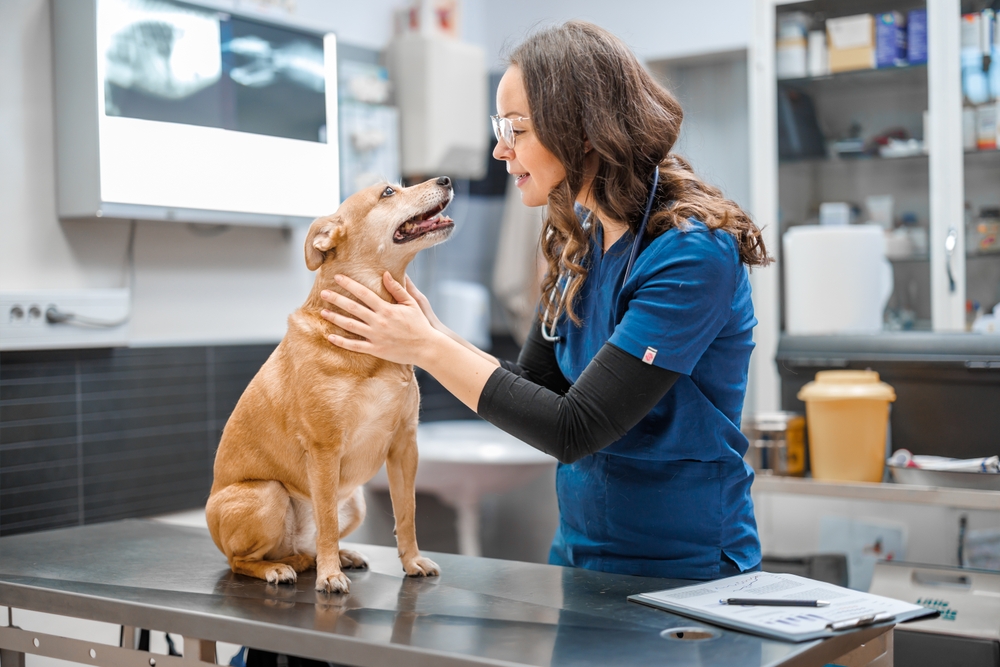
Diagnostic imaging reveals conditions that cannot be detected through physical examination or laboratory testing alone. Fractures, internal organ abnormalities, fluid accumulation, masses, foreign body ingestion, and heart enlargement are all examples of conditions that require visual confirmation for accurate diagnosis.
Having imaging equipment on-site means your pet can be examined, imaged, and diagnosed in a single visit. This is especially important during emergency and urgent care situations, where rapid imaging results directly influence treatment decisions and can be critical to stabilizing your pet.
Digital X-rays produce high-resolution images of your pet’s skeletal structure, chest cavity, and abdominal organs within seconds. Compared to traditional film-based radiography, digital imaging requires lower radiation doses, produces clearer images, and allows our veterinarians to adjust contrast and zoom for more detailed evaluation.
Common reasons for X-rays include suspected fractures or joint injuries, respiratory symptoms such as coughing or laboured breathing, vomiting or suspected foreign body ingestion, abdominal distension or pain, pre-surgical evaluation of musculoskeletal conditions, and monitoring of chronic conditions such as heart disease or arthritis. Our team positions your pet gently and takes images as efficiently as possible to minimize stress.
Ultrasound uses sound waves to produce real-time images of soft tissues and internal organs without radiation. It is particularly effective for evaluating the liver, kidneys, spleen, bladder, intestines, and reproductive organs. Unlike X-rays, ultrasound provides dynamic visualization — our veterinarian can observe organ movement, blood flow, and structural changes in real time during the scan.
Ultrasound is commonly used for pregnancy confirmation, evaluation of abdominal masses or fluid, assessment of organ size and texture in pets with abnormal bloodwork results, guided sampling of fluid or tissue for further analysis, and monitoring known conditions over time.
Imaging results are rarely interpreted in isolation. Our veterinary team combines radiographic and ultrasound findings with laboratory data, physical examination findings, and patient history to build a complete diagnostic picture. When imaging reveals a condition requiring surgical intervention, our surgical team uses the images to plan the procedure with precision. When specialized analysis is needed beyond what our in-house equipment can provide, we coordinate with reference laboratories and veterinary specialists for advanced interpretation.
While both modalities produce internal images, they serve different diagnostic purposes. X-rays excel at visualizing dense structures such as bones, teeth, and the chest cavity, and they are the primary tool for identifying fractures, arthritis, heart enlargement, and foreign objects. Ultrasound is better suited for evaluating soft-tissue organs — the liver, kidneys, spleen, bladder, and gastrointestinal tract — because it produces real-time, cross-sectional images without radiation exposure.
In many cases, our veterinarians use both modalities together to build a more complete diagnostic picture. A pet presenting with abdominal pain, for example, may receive X-rays to rule out an obstruction and an ultrasound to evaluate organ texture, fluid presence, and blood flow patterns. This complementary approach leads to more accurate diagnoses and more targeted treatment plans.
Digital radiography uses significantly lower radiation doses than older film-based systems, and exposure times are extremely brief. Ultrasound uses no radiation at all — it relies entirely on sound waves to generate images, making it one of the safest diagnostic tools available. Both modalities are considered very low risk, and our team takes all appropriate precautions to ensure patient safety during every imaging procedure.
Most digital X-rays can be performed with gentle manual restraint and minimal stress to your pet. However, some patients — particularly those in pain, highly anxious, or requiring very precise positioning — may benefit from light sedation to ensure comfort and image quality. Sedation decisions are made on a case-by-case basis with your pet’s wellbeing as the primary consideration. Ultrasound scans are typically non-invasive and well-tolerated, requiring only a small area of fur to be clipped for clear probe contact. Our team prioritizes your pet’s comfort throughout every imaging procedure and explains each step before it begins.
Diagnostic imaging at our clinic frequently identifies bone fractures and joint disease, heart enlargement and pulmonary changes, bladder stones and urinary tract abnormalities, gastrointestinal foreign bodies and obstructions, abdominal masses and organ enlargement, pregnancy status and fetal health, and thoracic fluid accumulation. Early detection through imaging often enables less invasive treatment and better outcomes. Regular wellness exams may identify changes that prompt imaging as part of a proactive diagnostic approach.
Our in-house imaging includes digital radiographs and ultrasound scans to visualize your pet’s internal organs, bones, and soft tissues safely and effectively. These tools allow our veterinary team to identify fractures, abdominal abnormalities, organ changes, masses, and orthopedic conditions with precision — all during a single clinic visit.
Your pet may need imaging when experiencing unexplained pain, breathing difficulties, abdominal swelling, vomiting, suspected fractures, or before surgical procedures. Ultrasound is also used for pregnancy confirmation, heart evaluation, and real-time assessment of internal masses or fluid accumulations that physical examination alone cannot detect.
During emergency situations, on-site digital X-rays and ultrasound provide rapid insight into trauma injuries, internal bleeding, blockages, and other critical conditions. Having imaging equipment in-house eliminates referral delays, allowing our team to diagnose and begin treating your pet without losing valuable time.
Most digital X-rays can be performed with gentle restraint and minimal stress. Some patients may need light sedation for optimal positioning or comfort, particularly those in significant pain. Ultrasound scans are typically non-invasive and well-tolerated. Our team always prioritizes your pet’s safety and comfort throughout every procedure.
Absolutely. Our imaging findings are routinely combined with in-house bloodwork, urinalysis, and cytology for comprehensive diagnostic assessments. This integrated approach ensures our veterinary team has complete information to diagnose conditions accurately and recommend appropriate treatment plans for your pet.
If you are searching for veterinary imaging near me or a pet vet near me with advanced diagnostic capabilities, South Etobicoke Animal Hospital provides exceptional in-house imaging services with extended evening and weekend availability. Pet families across Etobicoke and the GTA trust our team for thorough, compassionate diagnostic care.