
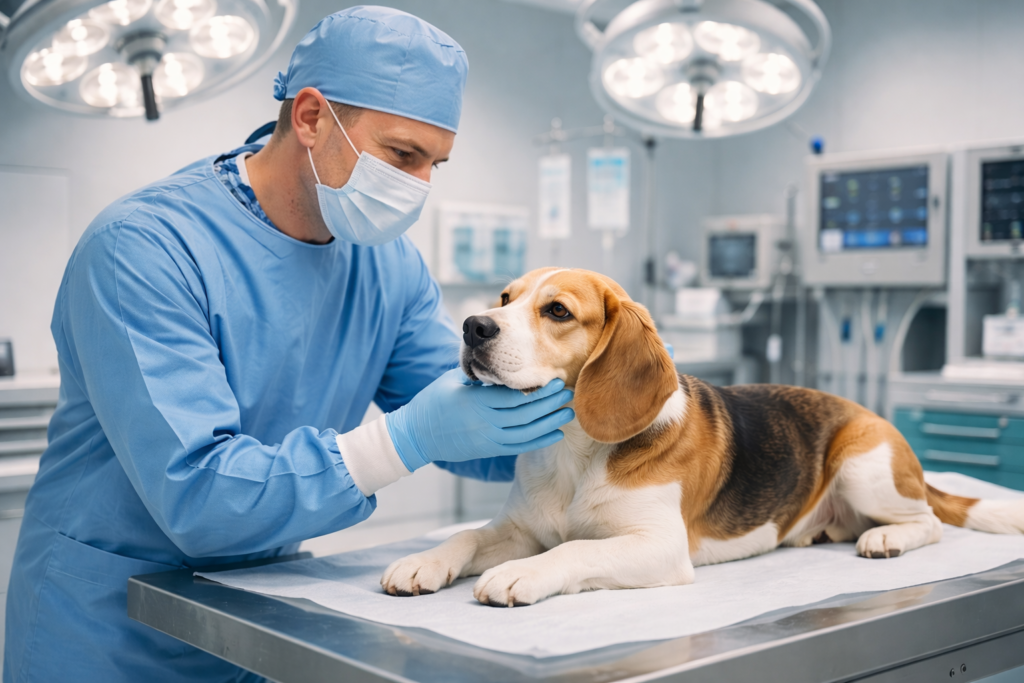
Surgery is one of those words that can make any pet owner’s stomach drop. Whether you’re scheduling a routine spay or facing an unexpected emergency procedure, the questions tend to pile up fast — Is this the right choice? Is my vet equipped to handle it? What happens if something goes wrong? What does recovery actually look like?
These are fair questions, and they deserve real answers. At South Etobicoke Animal Hospital, surgical care is one of the most carefully managed aspects of what we do. This guide walks you through everything you need to understand about pet surgery in Etobicoke — from the types of procedures we perform to how we prepare your pet before the first incision, and how we support them through recovery afterward.
What Types of Pet Surgery Are Performed at South Etobicoke Animal Hospital?
Not all veterinary practices offer the same surgical capabilities, and that gap matters when your pet needs care. South Etobicoke Animal Hospital’s surgical suite handles a broad range of procedures under one roof, which means you won’t routinely need a referral for most common surgeries.
Spay and Neuter Procedures
Spay and neuter procedures are among the most frequently performed operations in companion animal medicine, and for good reason. Beyond population control, spaying female dogs and cats significantly reduces the risk of uterine infections (pyometra) and mammary tumors. Neutering males lowers the incidence of testicular cancer and can reduce certain behavioral patterns. These are elective procedures, but elective doesn’t mean low-stakes — the same level of anesthesia monitoring, sterile technique, and post-operative care applies here as to any other surgery.
Soft Tissue Surgery
Soft tissue surgery covers a wide range of procedures involving organs, skin, muscle, and connective tissue — essentially anything that isn’t bone. This includes lump and mass removals, intestinal surgeries for foreign body obstructions, bladder procedures, and wound repairs following trauma or infection. It’s one of the most common categories in general veterinary practice, and competence here requires both technical skill and strong diagnostic support.
Wound Repair
Lacerations, bite wounds, and injuries from accidents often require surgical closure. Depending on the severity, this can range from simple suturing to complex reconstructive techniques. Timely intervention matters — wounds that go untreated for too long are significantly more difficult to manage cleanly and carry a higher risk of infection.
Mass and Lump Removals
Finding a lump on your dog or cat is unsettling, but it’s also common. Not every lump is cancerous, but every lump that changes, grows, or causes discomfort deserves proper evaluation and potentially surgical removal. Our team performs excisional biopsies and mass removals regularly, often with same-visit cytology to assess what we’re dealing with before finalizing a surgical plan.
Emergency Surgical Care
When a pet arrives in acute distress — following trauma, suspected toxin ingestion, or with signs of internal obstruction — emergency surgical care may be the immediate priority. The capacity to move from assessment to the operating table quickly is what separates a true emergency vet hospital from a standard clinic. SEAH’s surgical and emergency teams work together precisely for this reason.
Why Pre-Surgical Diagnostics Matter More Than Most People Realize
One of the most important — and often underappreciated — parts of surgical safety is what happens before the procedure begins. Pre-surgical diagnostics aren’t a formality. They’re the foundation that every responsible anesthesia and surgical plan is built on.
Before any planned surgery at South Etobicoke Animal Hospital, your veterinarian will conduct a thorough physical exam and typically recommend bloodwork through our in-house diagnostics lab. This pre-operative panel checks organ function — kidneys, liver, red and white blood cell counts — to flag anything that might increase anesthetic risk. A pet that appears perfectly healthy on the outside can still have subclinical kidney disease or a low platelet count that significantly affects how they respond to anesthesia.
In some cases, medical imaging is ordered before surgery as well. Digital X-rays can confirm that a suspected foreign body is actually present and localize it before the surgeon opens. Ultrasound can evaluate the size and condition of a mass, show whether there is free fluid in the abdomen, and help determine the safest surgical approach. This pre-operative imaging isn’t about adding steps — it’s about removing uncertainty before your pet is under anesthesia.
For older pets or those with known health conditions, reference laboratory testing through our partners at IDEXX and Antech may be recommended for a more comprehensive panel — thyroid levels, hormone testing, or culture and sensitivity results that can guide antibiotic selection before and after a procedure. A pet with unmanaged hyperthyroidism, for example, faces substantially higher cardiac risk under general anesthesia. Knowing this in advance allows the team to adjust the plan accordingly.
The practical takeaway: if your vet recommends pre-surgical testing and it feels like extra steps, understand that those steps are what allow your pet to be on the table safely rather than being rushed in blind.
Pain Management and Anesthesia Monitoring: What the Standards Actually Look Like
Anesthesia safety in veterinary medicine has improved dramatically over the past two decades, but that progress is only meaningful when the protocols are actually followed. Here is what responsible pain management and anesthesia monitoring looks like in practice.
Every patient at SEAH receives an individualized anesthetic protocol based on their species, age, weight, health status, and the specific procedure being performed. There is no universal dosing formula — a healthy three-year-old Labrador undergoing a routine neuter requires a different protocol than a twelve-year-old cat with early kidney disease coming in for a mass removal.
During surgery, a trained veterinary technician is dedicated to monitoring your pet’s vital signs continuously. This means tracking heart rate, respiratory rate, oxygen saturation (SpO2), blood pressure, body temperature, and depth of anesthesia in real time — not periodically checking in. Deviations from normal ranges trigger immediate adjustment. This level of vigilance is what allows problems to be caught and corrected before they become crises.
Pain management does not begin at recovery — it begins before the first incision. Pre-operative analgesics reduce the amount of anesthesia needed during surgery and blunt the pain response before it has a chance to establish itself. Post-operative pain management continues after the procedure, with specific medications tailored to the type of surgery and your pet’s individual needs. When you pick your pet up after surgery, the team will walk you through exactly what to give at home and when, and how to recognize signs that pain is not being adequately controlled.
Emergency Surgical Care: When There’s No Time to Wait
Pet emergencies rarely announce themselves in advance. A dog who got into the garbage may be fine — or may have ingested something that is now causing a life-threatening obstruction. A cat who was in a fight may have a wound that looks minor on the surface but involves deeper tissue damage that needs surgical attention.
Families across Etobicoke, Mimico, and the areas near Mississauga know that when something goes wrong after hours, South Etobicoke Animal Hospital is one of the few options offering true emergency surgical care with extended availability. We’re open until 10 PM on weekdays and until midnight on weekends — no appointment required for emergencies.
When a surgical emergency arrives, the sequence moves quickly: a rapid triage assessment, targeted diagnostics to confirm what we’re dealing with, stabilization where needed, and — if surgery is indicated — preparation for the operating room. There is no transfer to another facility and no waiting for a specialist callback. The decision to operate and the ability to follow through on that decision happen in the same building.
For pet owners in the western Toronto area who have been searching for an emergency vet hospital near me with genuine surgical capability, this is a meaningful distinction. Clinics that can diagnose an obstruction but can’t surgically address it force owners into a stressful transfer situation during a moment when time is already against them.
If your pet is showing signs of a surgical emergency — persistent vomiting, inability to pass stool, abdominal distension, trauma with visible wounds, or difficulty breathing — call us immediately at +1 (416) 201-9123. Our team can advise you on the phone and prepare for your arrival.
What Recovery Looks Like, and How to Support It at Home
The surgical procedure itself is only part of the process. What happens in the hours and days after surgery shapes how well and how quickly your pet heals. Here is what to expect.
Immediately post-surgery, your pet will be monitored in our recovery area as the anesthesia wears off. Temperature regulation, pain level, and responsiveness are all assessed before discharge. Most pets go home the same day for routine procedures, though some may require an overnight observation period depending on the complexity of the surgery and how they respond in recovery.
When you take your pet home, you’ll receive written discharge instructions covering wound care, activity restrictions, medication schedules, and signs that warrant a return call. These instructions are specific — not generic — because recovery looks different after a soft tissue abdominal surgery than after a simple lump removal on the skin surface.
Activity restriction is one of the most commonly underestimated parts of surgical recovery. A dog that feels good two days after surgery often wants to run, jump, and play — but the internal healing process takes significantly longer than the external signs suggest. Sutures may hold and the wound may look clean while the underlying tissue is still fragile. Following your vet’s movement restrictions genuinely matters.
Our veterinary surgical services include a follow-up exam after most procedures to assess healing, remove sutures where needed, and address any concerns that arose during recovery at home. This isn’t optional — it’s a scheduled part of the surgical process.
Choosing the Right Surgical Team: What to Actually Look for
When searching for pet care near me with surgical capability, the question isn’t simply which clinic is closest. It’s which clinic has the surgical infrastructure, the monitoring standards, and the diagnostic support to handle your pet’s specific needs — before, during, and after the procedure.
At South Etobicoke Animal Hospital, the surgical suite operates alongside an on-site diagnostics lab, digital imaging, and an emergency care team — all under one roof on The Queensway. For routine procedures and urgent situations alike, that integration makes a practical difference in the quality and safety of the care your pet receives.
We serve pet owners across South Etobicoke, Mimico, New Toronto, and surrounding communities — including those traveling in from the Mississauga border looking for a capable animal surgical care provider they can trust.
Frequently Asked Questions About Pet Surgery in Etobicoke
-
Does my pet need pre-surgical bloodwork even if they seem healthy?
Yes, for most procedures. Bloodwork assesses organ function and identifies risks that aren’t apparent on physical exam alone. This is especially important for pets over five years old and for any procedure requiring general anesthesia.
-
How long does recovery typically take after soft tissue surgery?
It varies by procedure and individual patient, but most pets need at least ten to fourteen days of restricted activity following soft tissue surgery, with a follow-up appointment scheduled within that window to assess healing.
-
Can I stay with my pet during surgery?
Owners are not present in the surgical suite during procedures, but our team keeps you informed and is available by phone during the operation. You’ll receive a call when your pet is in recovery.
-
What should I watch for at home after surgery?
Signs that warrant an immediate call include excessive swelling, discharge or reopening of the incision site, refusal to eat beyond 24 hours post-surgery, severe lethargy, vomiting, or signs of pain that are not controlled by the medications provided.
Visit South Etobicoke Animal Hospital
If your pet needs surgical care — planned or urgent — our team is here to guide you through every step.
Location: 741 The Queensway, Etobicoke, ON M8Z 1M8 Phone: +1 (416) 201-9123 Email: petcare@southetobicokeanimalhospital.ca
Hours:
- Monday & Tuesday: 12 PM – 10 PM
- Wednesday: Closed
- Thursday & Friday: 12 PM – 10 PM
- Saturday & Sunday: 12 PM – 12 AM
To book a surgical consultation or ask questions about an upcoming procedure, contact us — or call directly if your situation is urgent. We treat every pet like they matter, because to you, they do.